Bitcoin Miners Can Reduce Power Costs
Discover how Bitcoin miners can help stabilize energy grids and lower electricity bills when utilities tap their flexible power demand.

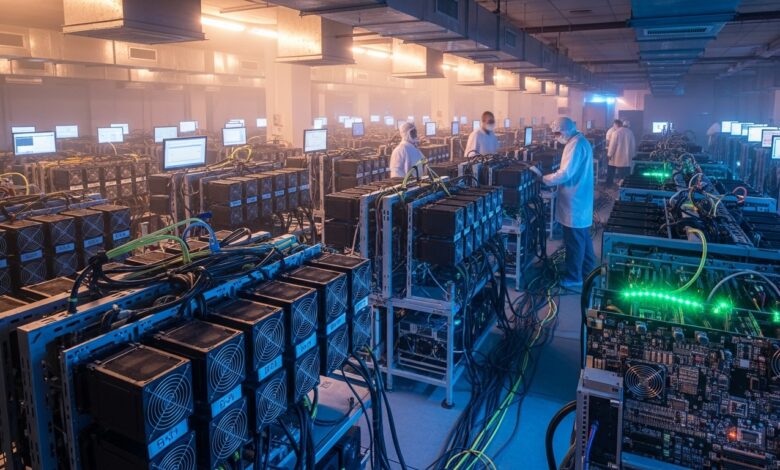
For years, public perception has viewed Bitcoin mining as an energy-hungry villain, a powerful driver of rising electricity bills and increased strain on power grids. Images of vast mining farms filled with thousands of machines humming around the clock create an impression of relentless consumption with no benefits for ordinary people. While it is true that Bitcoin mining requires substantial energy, what is often overlooked is how unusually flexible that energy consumption can be. Under the right conditions, Bitcoin miners can actually help stabilize local electricity systems, support renewable energy growth and, in some regions, even lower your power bill.
This possibility may sound counterintuitive, especially to anyone who has only encountered news headlines criticizing mining’s environmental impact. Yet energy experts increasingly recognize that mining facilities behave differently from traditional industrial consumers. Unlike factories or data centers, their operations can ramp up and down almost instantly, operate in remote areas without heavy infrastructure and absorb excess electricity that would otherwise be wasted. In markets where energy grids are evolving rapidly due to the rise of renewables, this flexibility can be extremely valuable.
The real question is not whether miners consume energy, but whether grids have the policies, programs and technology to harness that consumption productively. When energy systems treat miners as dynamic partners rather than passive loads, mining can act like a digital balancing tool that absorbs excess supply and sheds demand during shortages. When this synergy works, the financial benefits can ripple outward to homeowners and businesses who rely on stable, affordable electricity.
How Bitcoin miners really use electricity
To appreciate how mining can benefit the grid, it is essential to understand what Bitcoin miners actually do and how their operations differ from typical industrial users. At its core, Bitcoin mining is the process through which transactions are validated and added to the blockchain. Specialized machines known as ASICs perform trillions of mathematical operations per second in a global competition to secure the network. These machines need electricity to operate, which is why mining has developed a reputation as an energy-intensive activity.
Unlike factories, office buildings, hospitals or data centers, mining operations are not bound to strict schedules or the expectations of human users. A factory cannot simply shut down production whenever prices spike without causing significant financial loss and disruption. A hospital cannot reduce its electricity load during emergencies. Even data centers need consistent, predictable power to serve customers in real time.
By contrast, a mining facility can power down a large portion of its machines within seconds. This ability to instantly reduce energy usage without compromising productivity over the long term gives miners an extraordinary level of adaptability. While their consumption is heavy when running, their load is entirely discretionary. They care about electricity prices far more than the time of day, and this creates a unique opportunity for energy markets.
The energy grid’s problem: balancing supply and demand in real time

All electricity grids face a fundamental challenge: supply and demand must match at every moment. If demand exceeds supply, the grid becomes unstable and blackouts occur. If supply greatly exceeds demand, power is wasted or generation must be curtailed. Maintaining this balance is becoming more difficult as the world moves toward renewable energy sources, especially wind and solar, which produce electricity only when nature allows.
Peak demand periods pose another issue. Hot summer afternoons, cold winter mornings or sudden surges in household energy use force grid operators to activate expensive backup generators. These generators often rely on fossil fuels, and their high operating costs ultimately make electricity more expensive for consumers.
When miners operate under traditional electricity structures, they may appear to worsen these problems. However, when integrated into modern grid programs, their flexibility turns into a powerful asset. They can consume large amounts of electricity when the grid has excess and switch off when demand spikes or when prices become too high.
Why Bitcoin miners can act as an ideal flexible load
A flexible load is any electricity consumer that can increase or decrease consumption on demand. Energy grids value flexible loads because they help maintain stability. Bitcoin miners are among the most flexible loads ever created. Their operations can pause instantly, resume instantly and adjust smoothly based on grid conditions.
When the grid is oversupplied, miners can ramp up their consumption to absorb excess power that might otherwise go unused or force renewable generators to curtail production. During periods of scarcity, miners can turn off their machines, instantly freeing large amounts of electricity that can then flow to households and critical infrastructure. The grid effectively gains a digital switch that can be turned on and off based on real-time conditions.
Because miners are not producing perishable goods, providing healthcare services or storing critical data, they can participate in demand response in a way that no traditional industry can match. Demand response programs pay consumers to reduce usage when the grid is strained. Miners often earn more in these programs than they do from mining itself during those moments, giving them a strong financial incentive to reduce consumption. When miners curtail usage, the grid is less likely to rely on expensive emergency generation, which helps keep power prices stable for everyone.
From wasted energy to valuable economic activity
Another overlooked advantage of Bitcoin mining is its ability to use energy that would otherwise be wasted. Many remote power sources, such as hydroelectric dams, wind farms or natural gas flares, produce energy that cannot be delivered to users due to limited transmission infrastructure or insufficient regional demand. In other cases, renewable projects face curtailment because the grid cannot accept their full output.
Bitcoin miners can locate directly next to these stranded energy sources. When they do, they turn wasted energy into economic value, which supports local power producers and helps justify investment in renewable capacity. A remote wind farm, for example, may struggle financially during periods of low demand and curtailment. By hosting a mining facility on site, the project gains a buyer for its excess power, generating revenue that supports long-term operations and future expansion.
When renewable producers become more financially stable, the grid benefits because cheap, clean power becomes more abundant. Over time, this increased supply can contribute to lower average electricity prices for everyone connected to the system.
How Bitcoin miners can lower electricity prices for consumers
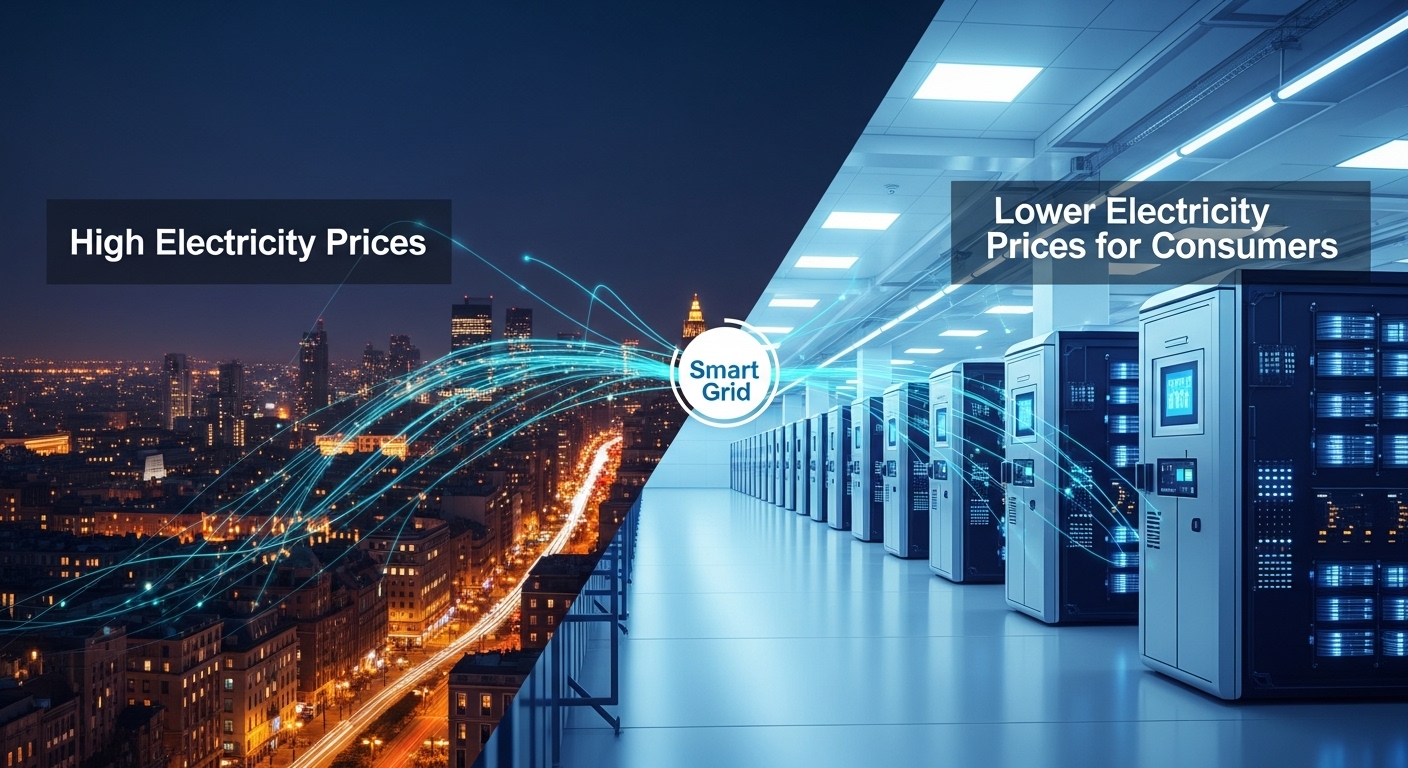
The idea that Bitcoin miners can reduce electricity bills may seem surprising, but it is rooted in well-understood economic and engineering principles. When miners act as flexible loads and support grid infrastructure, multiple mechanisms can lead to lower consumer costs.
Demand peaks are one of the main drivers of high electricity prices. When extreme weather or sudden usage spikes occur, utilities must activate costly generation resources. These costs eventually show up in customer bills. If Bitcoin miners curtail during these stressful moments, the need for expensive generation diminishes. That means fewer price spikes, fewer emergency interventions and more stable electricity markets. Over time, this stability translates into lower or more predictable residential bills.
Additionally, miners who absorb excess electricity during periods of oversupply create a more efficient grid. Electricity that would have been wasted becomes economically productive, making generation assets more profitable. When generators earn revenue from selling surplus power, they are less dependent on raising prices during other periods. This helps flatten price volatility and reduces long-term costs.
In regions where utilities have structured agreements with miners, part of the revenue miners provide by purchasing extra electricity or participating in demand response programs can flow directly into the utility’s budget. Those funds are sometimes used to offset residential tariffs, invest in grid upgrades or stabilize rates during periods of inflation. When miners are treated as partners in energy management rather than antagonists, the financial benefits can extend well beyond the mining facilities themselves.
Examples of miners supporting energy stability in practice
While the idea of miners helping energy grids is still unfamiliar to many, several regions have already demonstrated its effectiveness. In energy markets with dynamic pricing and strong participation in ancillary services, mining facilities have repeatedly reduced their consumption during extreme weather conditions, redirecting energy to homes and businesses. These events sometimes prevent blackouts entirely by shedding gigawatts of load in minutes.
Mining facilities participating in demand response programs often shut down for hours at a time during grid emergencies. The revenue they earn from these programs can exceed the Bitcoin revenue they would have achieved by staying online. The grid benefits because it avoids costly emergency operations, and residents benefit because the system becomes more resilient and less expensive to operate.
Renewable energy developers have also partnered with miners to improve project economics. Several solar and wind projects have remained financially viable only because miners provided a guaranteed buyer for excess production. By supporting the profitability of renewable assets, miners indirectly contribute to a cleaner energy mix, which in turn can lower long-term electricity prices.
These examples demonstrate that when Bitcoin mining is integrated intelligently, it acts like a pressure valve for the grid. It is not the mining itself that lowers costs, but the way mining interacts with supply and demand in real time.
See More: Best Bitcoin & XRP Cloud Mining Sites 2025
Barriers preventing miners from helping more grids
Despite the potential benefits, significant obstacles still prevent most regions from fully leveraging mining’s flexibility. The first barrier is regulatory uncertainty. Electricity markets often operate under decades-old rules that were never designed for rapidly dispatchable digital loads. Many utilities do not yet have tariff structures that reward miners for curtailing during peak times or consuming during off-peak periods. Without these incentives, the natural advantages of mining cannot be captured.
Another challenge is public perception. Media narratives that frame Bitcoin mining as purely wasteful make it difficult for regulators and utilities to explore more nuanced solutions. Environmental concerns remain significant, especially in regions with fossil-heavy electricity mixes. If miners contribute to carbon emissions by consuming coal-powered electricity, their benefits to the grid must be weighed against the climate impact. For miners to play a constructive role, they must align themselves with clean energy sources and commit to transparent reporting.
Energy infrastructure limitations also pose challenges. Some electricity grids lack the technology needed to communicate in real time with large industrial loads. Without advanced metering, smart grid systems and transparent demand response programs, miners cannot fully integrate into grid balancing operations. The benefits remain theoretical rather than practical unless utilities modernize their systems.
What must change for consumers to benefit directly
For the average household to see lower electricity bills thanks to Bitcoin mining, several key developments are necessary. First, utilities need more sophisticated pricing models that reward miners for acting as flexible loads. Time-of-use pricing, real-time rates and structured demand response incentives allow miners to behave in ways that benefit the entire grid.
Second, regulators must design programs that require some portion of the financial gains generated through mining-related grid services to flow back to consumers. When miners profit from curtailment programs or purchase excess energy, utilities should be able to use that revenue to offset rate increases or support grid improvements that reduce long-term costs.
Third, mining companies must operate transparently. Public trust will grow only when miners share detailed data on energy usage, curtailment behavior, renewable energy sourcing and participation in demand response programs. When the public can see evidence that mining facilities reduce grid strain rather than worsen it, support for these operations will increase.
Finally, utilities and miners must form long-term partnerships. Stability benefits both sides. Miners want predictable rates and access to clean, affordable energy. Utilities want flexible demand and reliable revenue streams. When these relationships are strengthened through multi-year agreements, everyone stands to gain.
A balanced view is Bitcoin mining good or bad for the grid
The debate around Bitcoin mining and energy is often polarized, but the truth is far more complex. Mining undeniably uses significant electricity, and in regions dependent on coal or gas, this can increase carbon emissions. At the same time, mining’s unique flexibility offers benefits no other industry can match. It can act as a demand buffer, an economic outlet for stranded energy, a stabilizing force during extreme weather events and a financial supporter of renewable energy development.
Whether mining ultimately raises or lowers electricity prices depends entirely on how energy grids integrate it. When miners operate on fossil-heavy grids with no curtailment programs, they can increase both emissions and consumer costs. When miners operate on grids with dynamic pricing, strong demand response programs and abundant renewables, their flexibility can stabilize the system and reduce reliance on expensive peak generation. In those circumstances, the net effect can be lower prices for consumers.
The potential is undeniable. Bitcoin miners can lower power bills, support renewable energy, stabilize grids and reduce waste. But these benefits do not occur automatically. They require thoughtful regulation, modernized grid infrastructure, transparent mining practices and cooperation between utilities and mining companies. When those pieces align, mining becomes more than a digital industry. It becomes a tool that helps build cleaner, cheaper and more resilient energy systems.