Ethereum Network Activity Reaches All-Time High—Yet Investors Show Greater Optimism Toward Gold
Ethereum network activity reaches an all-time high, yet investors show stronger optimism toward gold. Explore why sentiment is diverging in 2026.


The global financial landscape is once again at a crossroads. On one side stands Ethereum, the world’s leading smart contract blockchain, witnessing unprecedented levels of on-chain engagement. Daily transactions, active addresses, decentralized application usage, and layer-2 scaling solutions are all pushing Ethereum network activity to an all-time high. From decentralized finance to NFTs, gaming, tokenization, and enterprise experimentation, Ethereum’s ecosystem appears more alive than ever before.
Yet, despite this remarkable surge in usage, investor sentiment tells a more nuanced story. While developers and users continue to flock to the Ethereum network, a growing number of investors are showing greater optimism toward gold, the centuries-old safe-haven asset. Rising geopolitical uncertainty, inflationary pressures, and concerns about global economic stability are driving renewed interest in precious metals, even as blockchain adoption accelerates.
This divergence raises an important question: why does Ethereum network activity keep climbing while capital sentiment increasingly favors gold? this contrast requires a deeper look into Ethereum’s on-chain fundamentals, broader crypto market dynamics, macroeconomic conditions, and the psychological factors shaping investment decisions in 2026. This article explores these forces in detail, offering a comprehensive view of why Ethereum network activity and gold investor sentiment are moving in different directions.
Ethereum Network Activity Hits New All-Time Highs
Ethereum’s blockchain has entered a new phase of maturity, marked by sustained growth in usage rather than speculative hype alone. Network metrics now reflect real-world demand across multiple sectors.
Rising On-Chain Transactions and Active Addresses
One of the clearest indicators of Ethereum network activity is transaction volume. Over recent months, the number of daily transactions has consistently broken previous records, reflecting increased engagement across DeFi protocols, NFT marketplaces, stablecoin transfers, and enterprise applications. Active addresses have also surged, signaling not just automated contract interactions but genuine human participation.
This growth suggests Ethereum is no longer driven solely by speculative trading cycles. Instead, the network is increasingly used as a settlement and execution layer for a wide range of financial and digital services. The expansion of on-chain activity, even during periods of price consolidation, highlights Ethereum’s evolving role as critical infrastructure rather than a purely speculative asset.
Layer-2 Scaling Solutions Fuel Network Expansion
A major driver behind Ethereum’s all-time high activity is the rapid adoption of layer-2 solutions such as rollups. These technologies allow transactions to be processed faster and at lower costs while maintaining Ethereum’s security guarantees. As fees become more predictable and user-friendly, both developers and end users are more willing to build and transact on Ethereum.
The success of layer-2 ecosystems has also reduced congestion on the base layer while expanding the overall economic throughput of the network. This layered architecture strengthens Ethereum’s long-term scalability narrative and reinforces its position as the dominant smart contract platform.
The Expanding Role of Ethereum in Decentralized Finance
Decentralized finance remains one of the strongest pillars supporting Ethereum network activity. Even as new blockchains compete for attention, Ethereum continues to anchor the majority of DeFi liquidity and innovation.
DeFi Liquidity and Protocol Usage Continue to Grow
Ethereum-based DeFi protocols manage hundreds of billions of dollars in total value locked across lending, trading, derivatives, and yield strategies. Daily user interactions with these protocols contribute significantly to Ethereum’s record-breaking network activity. Importantly, this growth is not limited to speculative yield farming but increasingly includes real-world use cases such as remittances, treasury management, and on-chain credit.
The resilience of DeFi on Ethereum demonstrates that trust in the network’s security and decentralization remains strong. For many users, Ethereum is viewed as the safest environment to deploy large amounts of capital in decentralized systems.
Institutional Interest Supports Long-Term Usage
Institutional players have also played a role in driving Ethereum network activity. Asset managers, fintech firms, and even traditional banks are experimenting with Ethereum-based tokenization, settlement, and compliance tools. While institutions may remain cautious in terms of direct ETH exposure, their operational usage of the network contributes to growing on-chain demand. This institutional engagement reinforces Ethereum’s reputation as a neutral, programmable financial layer, even if short-term investor sentiment remains cautious.
NFTs, Gaming, and Digital Ownership Boost Engagement

Beyond finance, Ethereum continues to dominate the broader digital ownership economy. NFTs, blockchain gaming, and creator platforms are contributing meaningfully to network activity.
NFTs Evolve Beyond Speculation
While the speculative NFT boom has cooled compared to earlier cycles, NFT usage has matured. Today, NFTs on Ethereum are increasingly used for gaming assets, digital identity, event access, and intellectual property management. These practical use cases generate consistent on-chain interactions rather than sporadic hype-driven spikes. This evolution supports a more sustainable level of Ethereum network activity, driven by ongoing utility rather than one-off speculation.
Blockchain Gaming and Metaverse Integration
Ethereum’s ecosystem has also become a foundation for blockchain gaming and metaverse projects, often integrated with layer-2 solutions for scalability. Player transactions, asset trading, and in-game economies add another layer of persistent demand for Ethereum-based infrastructure. Together, these sectors highlight how Ethereum’s utility continues to expand, even if market narratives shift elsewhere.
Investor Sentiment: Why Gold Is Regaining Favor
Despite Ethereum’s strong fundamentals, investor optimism is increasingly tilting toward gold. This shift is less about rejecting crypto and more about managing risk in an uncertain macroeconomic environment.
Gold’s Role as a Safe-Haven Asset
Gold has long been viewed as a hedge against inflation, currency devaluation, and geopolitical instability. In times of uncertainty, investors often prioritize capital preservation over growth potential. As global economic conditions remain fragile, gold’s appeal has strengthened. Unlike Ethereum, gold does not rely on technological adoption curves or regulatory clarity. Its value proposition is simple and historically proven, which resonates with risk-averse investors during volatile periods.
Macroeconomic Pressures Influence Asset Allocation
Rising interest rates, persistent inflation concerns, and geopolitical tensions have pushed many investors to rebalance portfolios. While Ethereum offers long-term growth potential, it is still perceived as a higher-risk asset compared to gold. This perception influences short- to medium-term capital flows, even as Ethereum network activity continues to grow. The result is a divergence where usage metrics and price sentiment do not move in lockstep.
Ethereum as a Technology vs. Ethereum as an Investment
Understanding the gap between network activity and investor optimism requires separating Ethereum’s technological success from its market valuation.
Strong Fundamentals Do Not Always Translate to Immediate Price Gains
Ethereum’s all-time high network activity reflects real adoption, but markets often price assets based on expectations rather than current usage. Regulatory uncertainty, competition from other blockchains, and broader risk-off sentiment can suppress investor enthusiasm even when fundamentals are improving.
This dynamic is not unique to crypto. Many transformative technologies have experienced periods where adoption outpaced investor returns before sentiment eventually caught up.
Volatility Shapes Investor Psychology
Cryptocurrency markets are still characterized by high volatility. For many investors, Ethereum’s price swings overshadow its underlying utility. Gold, by contrast, offers stability and predictability, making it attractive during times of stress.
This psychological factor plays a significant role in why gold sentiment can rise even as Ethereum network activity reaches new heights.
Regulatory Uncertainty and Its Impact on Crypto Sentiment
Another factor influencing investor preference is the evolving regulatory landscape surrounding digital assets.
Ongoing Regulatory Developments Create Caution
While Ethereum has gained clarity in some jurisdictions, global regulation remains inconsistent. Questions around taxation, compliance, and classification continue to create uncertainty for investors. This uncertainty does not necessarily affect users or developers in the same way, allowing network activity to grow even as capital sentiment remains cautious. Gold, by contrast, operates within a well-established regulatory framework, making it easier for institutional investors to allocate capital with confidence.
Long-Term Clarity Could Shift Sentiment Back to Ethereum
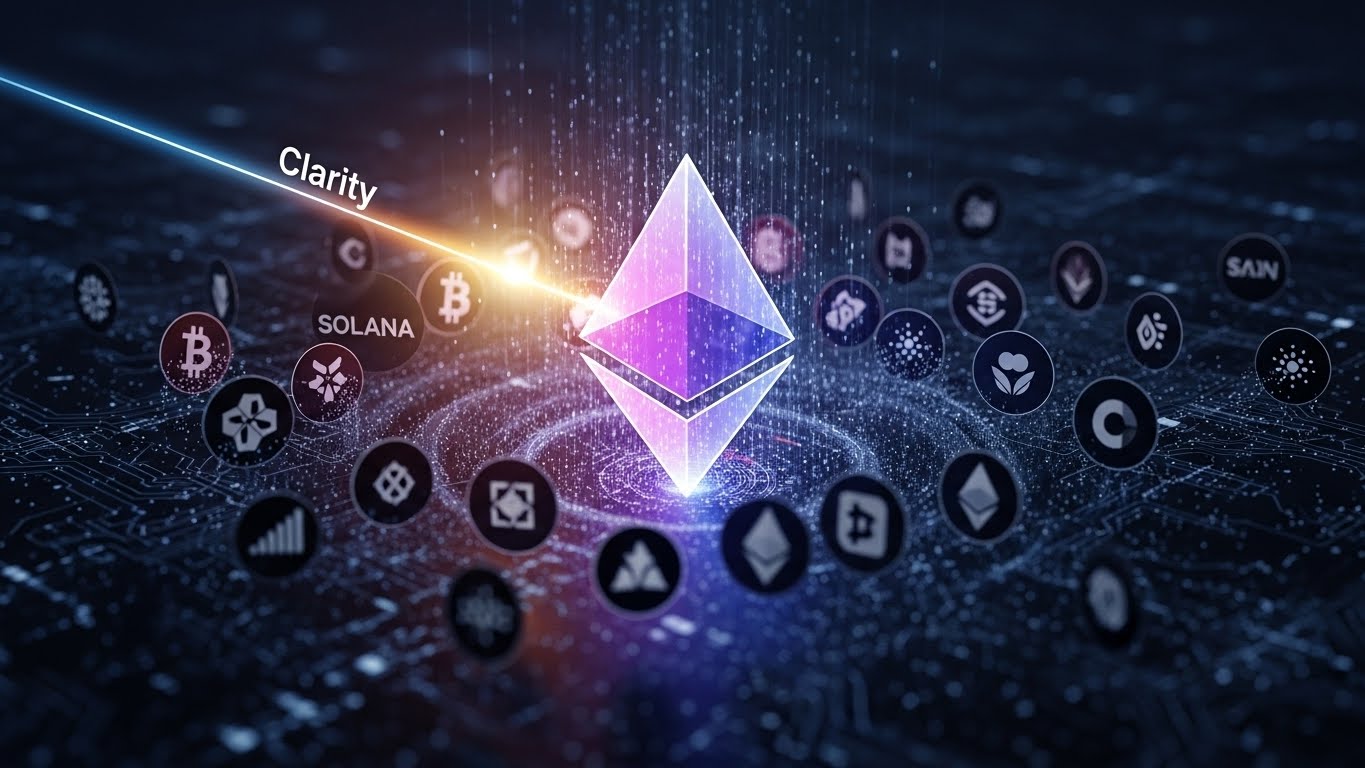
Over time, clearer regulations could help bridge the gap between Ethereum’s technological adoption and investor optimism. As rules become more predictable, institutional participation may increase, aligning capital flows with network usage trends.
Comparing Ethereum and Gold as Stores of Value
The comparison between Ethereum and gold often centers on their roles as stores of value, yet they serve fundamentally different purposes.
Ethereum’s Digital Utility vs. Gold’s Physical Scarcity
Ethereum derives value from its utility as a programmable blockchain supporting decentralized applications. Its scarcity is algorithmic, shaped by monetary policy changes such as fee burning. Gold’s value, on the other hand, comes from physical scarcity and historical trust. Investors choosing gold are often prioritizing stability, while those committed to Ethereum are betting on technological transformation and long-term growth.
Portfolio Diversification Drives Diverging Preferences
Many sophisticated investors hold both assets, using gold for stability and Ethereum for growth exposure. The current divergence in sentiment reflects shifting portfolio weights rather than a wholesale rejection of crypto.
What Ethereum’s High Network Activity Signals for the Future
Despite current investor caution, Ethereum’s record network activity sends a strong signal about its long-term prospects.
Adoption Trends Suggest Enduring Relevance
Sustained growth in usage across multiple sectors suggests Ethereum is becoming deeply embedded in the digital economy. This level of adoption is difficult to reverse and may eventually influence investor sentiment more strongly.
Infrastructure Growth Lays the Foundation for Future Value
As Ethereum continues to scale and improve efficiency, its role as a global settlement layer becomes more compelling. Over time, this infrastructure growth could narrow the gap between network fundamentals and market perception.
Conclusion
Ethereum network activity reaching an all-time high is a powerful testament to the blockchain’s growing relevance and utility. From DeFi and NFTs to gaming and enterprise applications, Ethereum continues to expand its footprint across the digital economy. Yet, the parallel rise in investor optimism toward gold highlights the complex interplay between technological adoption and macroeconomic sentiment.
Gold’s renewed appeal reflects caution, stability, and a desire for capital preservation in uncertain times. Ethereum, meanwhile, represents innovation, transformation, and long-term growth potential. The divergence between these two assets does not signal weakness in Ethereum’s fundamentals but rather underscores how different forces drive usage and investment behavior.
As regulatory clarity improves and macroeconomic conditions stabilize, investor sentiment may realign more closely with Ethereum’s impressive network activity. Until then, the contrast between Ethereum and gold offers valuable insight into how markets balance risk, innovation, and security in a rapidly changing financial world.
FAQs
Q: Why is Ethereum network activity at an all-time high?
Ethereum network activity is rising due to increased usage in DeFi, NFTs, gaming, stablecoin transfers, and layer-2 scaling solutions that make transactions cheaper and faster.
Q: If Ethereum usage is growing, why are investors favoring gold?
Investors often prioritize safety during uncertain economic conditions. Gold’s historical stability makes it attractive as a safe-haven asset, even while Ethereum adoption grows.
Q: Does high Ethereum network activity guarantee price increases?
Not necessarily. Strong fundamentals can take time to translate into price appreciation, especially when broader market sentiment is risk-averse.
Q: How do regulations affect Ethereum investor sentiment?
Regulatory uncertainty can make investors cautious, even if developers and users continue to build on Ethereum without interruption.
Q: Can Ethereum and gold coexist in an investment portfolio?
Yes. Many investors use gold for stability and Ethereum for long-term growth, making them complementary rather than competing assets.