Bitcoin Mining Hedge Bitmain vs the AI Bubble
Bitmain leans on bitcoin mining as a hedge against an AI bubble—exploring ASIC economics, capital cycles, energy, and crypto market dynamics.


The global technology market has entered a strange, exciting phase where artificial intelligence feels both inevitable and overheated. Capital is pouring into AI models, AI data centers, and cutting-edge chips at a pace that resembles past boom cycles—moments when innovation is real, but valuations detach from near-term cash flows. In that kind of environment, companies with exposure to hardware demand face a difficult question: do you chase the hype, or do you protect the core business that reliably generates revenue when sentiment shifts?
That’s where the headline “Bitmain Uses Bitcoin Mining as Hedge Against AI Bubble” starts to make sense. Bitmain is widely associated with bitcoin mining because it dominates the world of ASIC manufacturing—the specialized machines that power proof-of-work networks. While AI is often powered by GPU clusters and specialized accelerators, bitcoin mining runs on a different set of economics: predictable issuance rules, transparent market pricing for bitcoin, and a brutally competitive efficiency race measured in watts and terahash. In other words, it’s not a story about optimism; it’s a story about resilience.
When you view Bitcoin Mining Hedge as a hedge, you’re not claiming it’s risk-free. Mining profitability moves with bitcoin price, network difficulty, energy costs, regulation, and the relentless march of better hardware. But unlike the frothiest corners of AI speculation—where revenue can be distant and projections can be heroic—bitcoin mining is grounded in immediate market feedback. Miners either produce bitcoin at a competitive cost or they don’t. That “hard math” can be a defensive advantage when markets get euphoric and then suddenly cautious.
In this article, we’ll unpack how Bitmain could use bitcoin mining as a hedge against an AI bubble, why the two cycles intersect, and what it means for miners, investors, and the broader crypto economy. We’ll keep the discussion practical: capital allocation, hardware strategy, energy dynamics, and the long-term role of bitcoin mining in a world obsessed with AI.
Bitmain’s Position in the Mining Economy
Bitmain sits at a strategic chokepoint in bitcoin mining: the hardware layer. Miners compete primarily through hashrate and cost efficiency, and Bitmain’s mining rigs—notably its Antminer line—have shaped the industry’s performance curve for years. When the network becomes more competitive, miners don’t negotiate with the protocol; they upgrade equipment, optimize power, and hunt for better hosting. 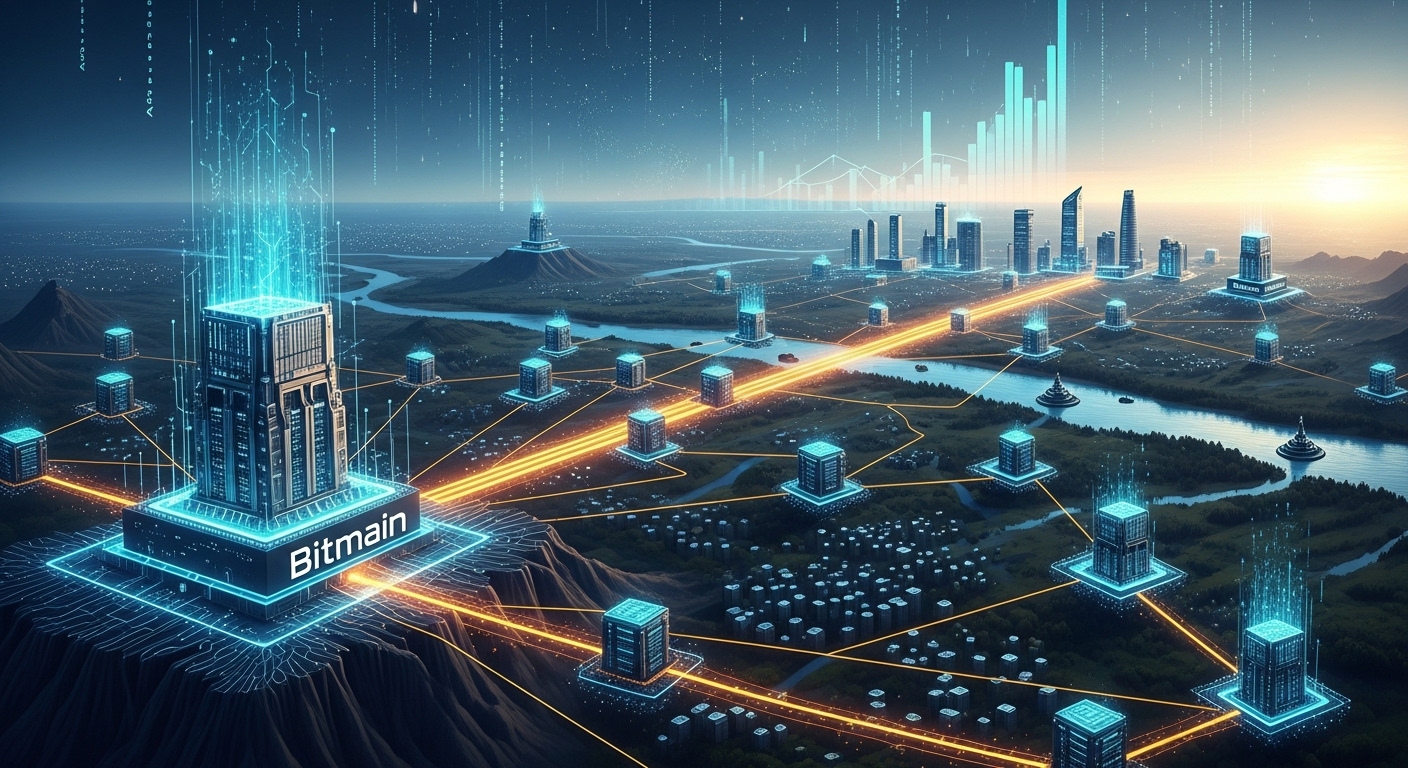
Because of this role, Bitmain’s fortunes are tied to the health of bitcoin mining, but not in a simplistic “bitcoin up, Bitmain up” way. The company benefits when miners expand fleets, when older machines are replaced, and when new facilities are built. Even in choppy markets, the most efficient operators still buy hardware to stay competitive. That creates a structural demand channel: when mining margins compress, the pressure to improve energy efficiency increases, and specialized ASIC hardware becomes even more important.
Hardware Cycles and the ASIC Advantage
A major reason bitcoin mining can function as a hedge is that it follows a clear technology and cost curve. Unlike general compute, where “best chip” can mean many things depending on the workload, bitcoin mining is singular: the SHA-256 function. That narrow target allows ASIC makers to optimize for one job better than any general-purpose chip ever could.
This specialization creates a recognizable cycle. New generations of miners deliver better joules-per-terahash, old generations become less competitive, and operators recalibrate the break-even cost of bitcoin mining. For Bitmain, this cycle can be stabilizing. When markets become uncertain, companies and investors often prefer businesses with measurable unit economics. Bitcoin mining offers exactly that: cost per bitcoin, cost per terahash, and clear sensitivity to energy and price.
Mining as Infrastructure, Not Just Speculation
In bull markets, bitcoin mining is sometimes framed as speculative leverage on bitcoin. In reality, the industry behaves much more like infrastructure. Mining fleets resemble industrial assets, and large operators run facilities that look like data centers—with power contracts, cooling systems, firmware management, maintenance schedules, and logistics.
This “infrastructure” framing is crucial to the hedge narrative. If an AI bubble deflates and capital becomes more selective, the market often rotates toward businesses with tangible assets and immediate monetization. Bitcoin mining can fit that description when done efficiently, because it converts electricity into a globally priced digital commodity. Bitmain’s deep alignment with that infrastructure layer can function like ballast when AI valuations swing wildly.
Understanding the AI Bubble Risk and Why It Spooks Hardware Markets
Not all AI enthusiasm is irrational. AI is transforming software workflows, search, media creation, and enterprise operations. But bubbles don’t require fake technology; they require inflated expectations, crowded positioning, and valuation premised on perfect execution. The risk is not “AI fails,” but “AI gets priced like it can’t disappoint.”
Hardware markets are particularly sensitive to this. When demand surges, supply chains expand, competitors rush in, and buyers pre-order capacity. If the cycle turns, inventories pile up, resale values drop, and margins compress. That’s the classic boom-bust pattern in semiconductors and high-performance compute.
Where Bitcoin Mining Differs From AI Compute
AI compute demand is diverse and often opaque. Training large models, serving inference, and running enterprise workloads have different performance needs. Pricing is also layered: cloud contracts, reserved instances, platform bundling, and long-term commitments. It can be difficult to tell when demand is real versus when it is precautionary stockpiling.
By contrast, bitcoin mining operates in an open, adversarial environment. The network difficulty adjusts, competition is global, and revenue is tied to bitcoin price and the block reward. That transparency can make bitcoin mining a hedge against the narrative-driven pricing that sometimes dominates AI.When Bitmain leans into bitcoin mining, it’s leaning into a market that punishes wishful thinking quickly. That harsh feedback loop can be healthy when other parts of the tech ecosystem are being valued on stories rather than cash flows.
How Bitmain Uses Bitcoin Mining as a Hedge Against AI Bubble
The phrase “Bitmain Uses Bitcoin Mining as Hedge Against AI Bubble” can be interpreted as a strategic posture: maintaining strong exposure to bitcoin mining because it provides counter-cyclical benefits when AI markets overheat. This hedge can work in multiple layers—revenue diversification, product positioning, and narrative insulation.
Revenue Diversification Through a Different Demand Driver
If AI hardware demand slows, the entire ecosystem of suppliers can feel it: chipmakers, server OEMs, hosting providers, and component vendors. Bitmain’s core exposure is different. Its primary growth driver is the health of bitcoin mining and the demand for efficient ASIC machines. Even when AI markets cool, bitcoin mining can remain active due to bitcoin’s own cycle, global energy arbitrage, and the relentless competition that forces upgrades.That doesn’t mean bitcoin mining is always booming when AI is weak. It means the correlation is imperfect. A hedge is valuable precisely because it doesn’t move in lockstep with the risk you’re hedging.
Product Strategy: Specialized ASICs vs General AI Chips
Bitmain’s specialization in ASIC design for bitcoin mining can be a strategic moat. In an AI bubble scenario, general compute can become crowded: too many vendors, too much capacity chasing the same hyperscaler contracts, and intense pricing pressure. A specialized bitcoin mining product line may avoid some of that crowding because it serves a more specific, globally distributed customer base.
There’s also a psychological angle. In an AI hype cycle, many firms feel compelled to reposition as “AI-first” even when it stretches their competence. Bitmain’s credibility is strongest where it has long-term execution: bitcoin mining hardware and the surrounding ecosystem. Staying anchored there can be a hedge against strategic drift.
Cash-Flow Discipline and Hard Unit Economics
Another way bitcoin mining functions as a hedge is cultural. Mining forces operators—and hardware suppliers—to think in cost-per-unit terms. What does it cost to generate one bitcoin? How does hashrate scale with power? What happens after a halving? These questions promote disciplined planning.
When AI markets get euphoric, discipline can erode. Companies may chase growth at any cost, betting on future monetization. A strong bitcoin mining business encourages the opposite: efficiency, payback periods, and survival through volatility. If Bitmain embraces this mindset, it can protect decision-making quality when AI narratives become loud.
The Economics of Bitcoin Mining That Make It a “Hedge”
To understand the hedge claim, you need to understand what stabilizes bitcoin mining over time. Again, it’s not that mining is stable day-to-day. It’s that the rules are consistent and the feedback loop is fast.
Difficulty Adjustment and Competitive Equilibrium
Bitcoin’s difficulty adjustment is a built-in stabilizer. When more hashrate enters the network, difficulty rises and rewards per unit of hashrate fall. When miners shut off due to low profitability, difficulty drops and the remaining miners earn more. This mechanism pushes bitcoin mining toward a rough equilibrium, where the marginal miner is near break-even. 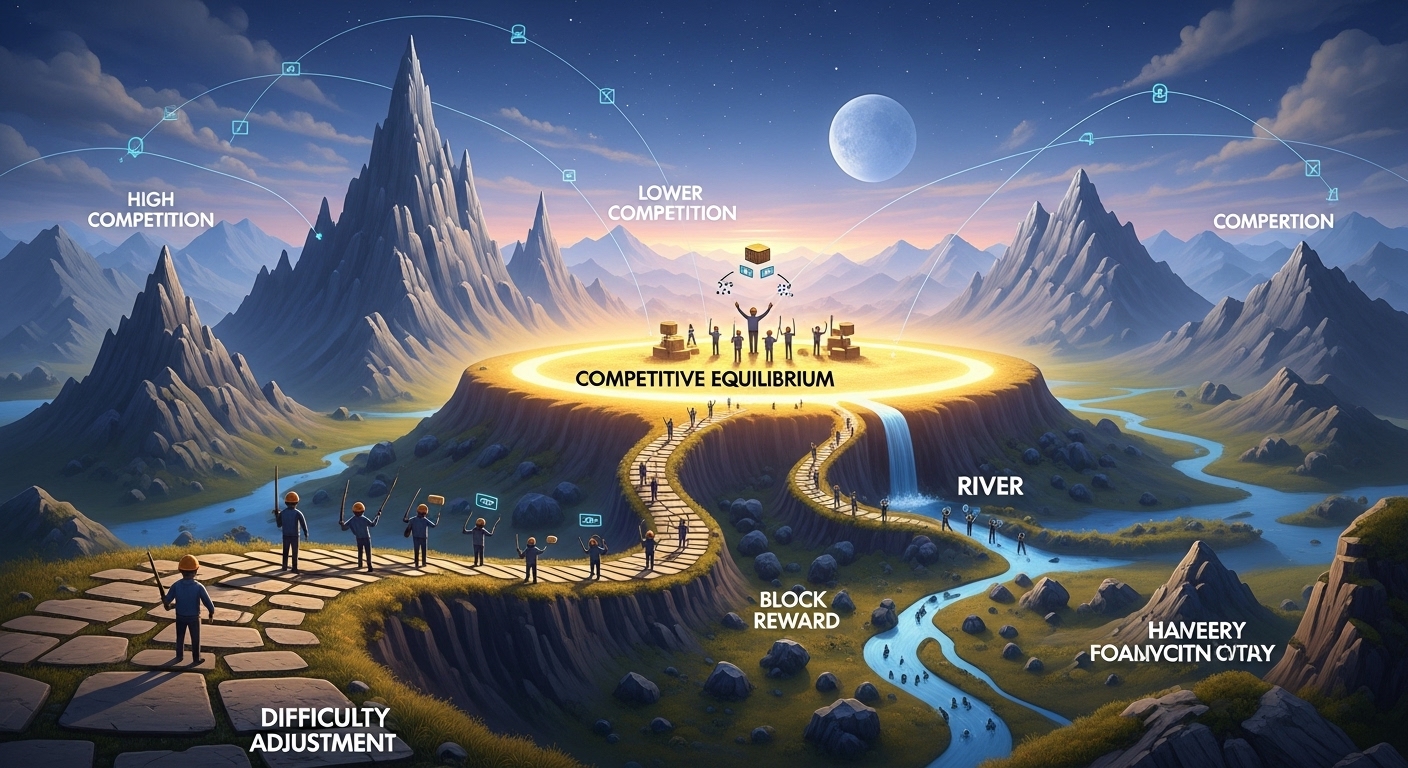
For Bitmain, this is important because it means mining doesn’t simply “die” when conditions are tough. The network adapts, and efficient operators survive. That survival pressure drives ongoing demand for better ASIC machines, especially those that improve energy efficiency.
Halving Cycles and Hardware Replacement Demand
The Bitcoin halving reduces the block reward over time, which tends to compress miner revenue unless bitcoin price rises enough to offset it. This structural revenue pressure reinforces the hardware upgrade cycle. Operators are incentivized to replace older mining rigs with newer machines that can mine profitably at lower costs.
This dynamic supports the idea that bitcoin mining can act as a hedge: even when markets are uncertain, the protocol’s schedule continues, and competition forces modernization. Bitmain’s core business can remain relevant through these transitions because the industry can’t simply “stand still” without falling behind.
Energy, Hosting, and Global Arbitrage
Bitcoin mining is, at its heart, an energy business. The best miners secure low-cost power, optimize uptime, and manage heat efficiently. This creates global arbitrage opportunities. Operators can move to regions with surplus energy, partner with power producers, or use demand response strategies.
AI compute also depends on power, but it tends to be concentrated among hyperscalers and large data center hubs. Bitcoin mining is more geographically flexible. That flexibility can help the sector stay active even as other tech infrastructure cycles concentrate and then retrench.
Where AI and Bitcoin Mining Overlap—and Where They Don’t
It’s tempting to treat AI and bitcoin mining as competing for the same chips and power. In some cases, they do overlap, especially around data centers, grid constraints, and capital budgets. But the differences are just as important.
Shared Constraints: Power and Facilities
Both AI compute and bitcoin mining care deeply about power availability, cooling, and facility uptime. As AI expands, it can tighten power markets and raise costs in certain regions. That can pressure bitcoin mining margins and force miners to become even more efficient.
This is where Bitmain’s hedge strategy can become more nuanced. If AI demand pushes energy prices up, the mining industry’s response is to deploy more efficient ASIC machines and seek better locations. Bitmain benefits by offering hardware that enables miners to adapt.
Different Value Propositions
AI compute is judged by performance on workloads that evolve rapidly. New model architectures, serving patterns, and optimization techniques can reshape demand. Bitcoin mining is judged by one thing: efficiency at SHA-256. That stability reduces product uncertainty. When you buy an Antminer, you’re buying throughput on a fixed algorithm, not betting on the next AI framework.This difference supports the hedge framing because AI bubbles often pop when expectations about future workloads or monetization shift. Bitcoin mining has fewer moving parts in the value proposition.
Risks and Criticisms: The Hedge Isn’t Perfect
A responsible take on “Bitmain Uses Bitcoin Mining as Hedge Against AI Bubble” must acknowledge the risks. A hedge reduces exposure; it doesn’t eliminate it.
Bitcoin Price Volatility and Market Cycles
The biggest risk to bitcoin mining is still bitcoin’s price cycle. If price drops sharply while energy costs rise and difficulty remains high, mining margins can collapse. In those periods, hardware demand can weaken and inventory risk can increase.
Regulatory and Environmental Pressure
Mining faces regulatory scrutiny in many regions, often tied to energy usage and emissions. Policy changes can shift hosting availability or raise operational costs. A hedge that depends on bitcoin mining must account for these external risks.
Competition and Hardware Commoditization
Bitmain is dominant, but competition exists. If competitors close the efficiency gap or undercut pricing, margins can compress. Additionally, the secondary market for mining rigs can affect new hardware sales during downturns.Even with these risks, the hedge thesis can still hold if the correlation with AI bubble outcomes remains low enough and if Bitmain manages inventory, pricing, and product cycles with discipline.
What This Strategy Could Mean for Investors and the Crypto Market
If Bitmain continues to emphasize bitcoin mining as a hedge, it sends a message about where it believes durable demand will remain when hype cycles cool. It also reinforces the long-term role of bitcoin mining as a foundational industry rather than a temporary trend.
For the broader crypto market, this stance can support confidence in mining infrastructure. Efficient hardware rollout tends to professionalize the sector, stabilize network security, and deepen the ecosystem of hosting and energy partnerships.
At the same time, it may influence how people think about “AI vs crypto.” The two can coexist, but they may perform differently across macro cycles. In a world where AI narratives can become overheated, bitcoin mining can look like the unfashionable workhorse—unsexy, but measurable.
Conclusion
“Bitmain Uses Bitcoin Mining as Hedge Against AI Bubble” is ultimately a story about choosing hard economics over hype sensitivity. While AI is transforming technology, it is also susceptible to cycles of exuberance and disappointment—especially in hardware-heavy segments. Bitcoin mining offers a different kind of exposure: immediate market feedback, transparent revenue mechanics, and a relentless focus on hashrate and energy efficiency. For Bitmain, staying anchored to bitcoin mining can diversify risk, reinforce disciplined decision-making, and provide resilience if AI valuations wobble. The hedge isn’t perfect—bitcoin volatility, regulation, and competition still matter—but the logic is clear: when narratives inflate, businesses with durable unit economics often look smarter in hindsight.
FAQs
Q: Why would bitcoin mining hedge against an AI bubble?
Because bitcoin mining is governed by transparent protocol rules and immediate profitability feedback, while AI hype can inflate valuations based on long-term projections. The lower correlation can provide hedging benefits.
Q: Does Bitmain benefit only when bitcoin prices rise?
No. While higher prices generally help miners, Bitmain can also benefit from competitive pressure that drives upgrades, especially when miners need more efficient ASIC hardware to stay profitable.
Q: How do ASIC miners differ from AI GPUs?
ASIC machines are purpose-built for bitcoin mining and optimize SHA-256 efficiency, while GPU and AI accelerators are designed for flexible parallel workloads like training and inference.
Q: What role does the Bitcoin halving play in mining demand?
The halving reduces the block reward, often pushing miners to upgrade hardware and improve efficiency. That can sustain demand for new mining rigs even when conditions are tight.
Q: What are the biggest risks to the bitcoin mining hedge strategy?
Key risks include bitcoin price downturns, energy cost spikes, regulatory constraints, and increased competition in ASIC manufacturing that could squeeze margins or reduce demand.
Also More: Bitcoin Mining Stocks Rally as Crypto Concept Stocks Rise While U.S. Indices Edge Lower