Is Altcoin Season Beginning as BTC Dominance Falls?
Is altcoin season beginning? A BTC dominance breakdown hints at a major shift in the crypto market cycle. Explore signals, risks, and what comes next.

The cryptocurrency market is once again at a crossroads. After months of consolidation and sharp moves in Bitcoin, traders and investors are asking the same question: Is altcoin season beginning? The latest BTC dominance breakdown has intensified speculation that capital rotation may be underway, setting the stage for a potential surge across alternative cryptocurrencies.
Historically, shifts in Bitcoin dominance have acted as leading indicators for broader crypto market cycles. When Bitcoin commands the majority of market capitalization, it often signals risk aversion. But when dominance starts to fall, it can hint at rising investor appetite for higher-beta assets — namely altcoins. A decisive BTC dominance breakdown is often interpreted as the first tremor before a broader altcoin rally.
In this in-depth analysis, we’ll examine what BTC dominance really means, why its breakdown matters, how previous cycles unfolded, and whether current conditions truly suggest that altcoin season is beginning. We’ll also evaluate macroeconomic factors, liquidity conditions, on-chain metrics, and sentiment indicators to provide a balanced, data-driven perspective.
Understanding Bitcoin Dominance and Market Cycles
To determine whether altcoin season is beginning, it’s critical to understand the mechanics behind BTC dominance and how it influences the broader crypto ecosystem.
What Is BTC Dominance?
BTC dominance refers to Bitcoin’s share of the total cryptocurrency market capitalization. It is calculated by dividing Bitcoin’s market cap by the overall crypto market cap. When dominance rises, it means Bitcoin is outperforming altcoins. When dominance falls, capital is flowing into alternative assets.
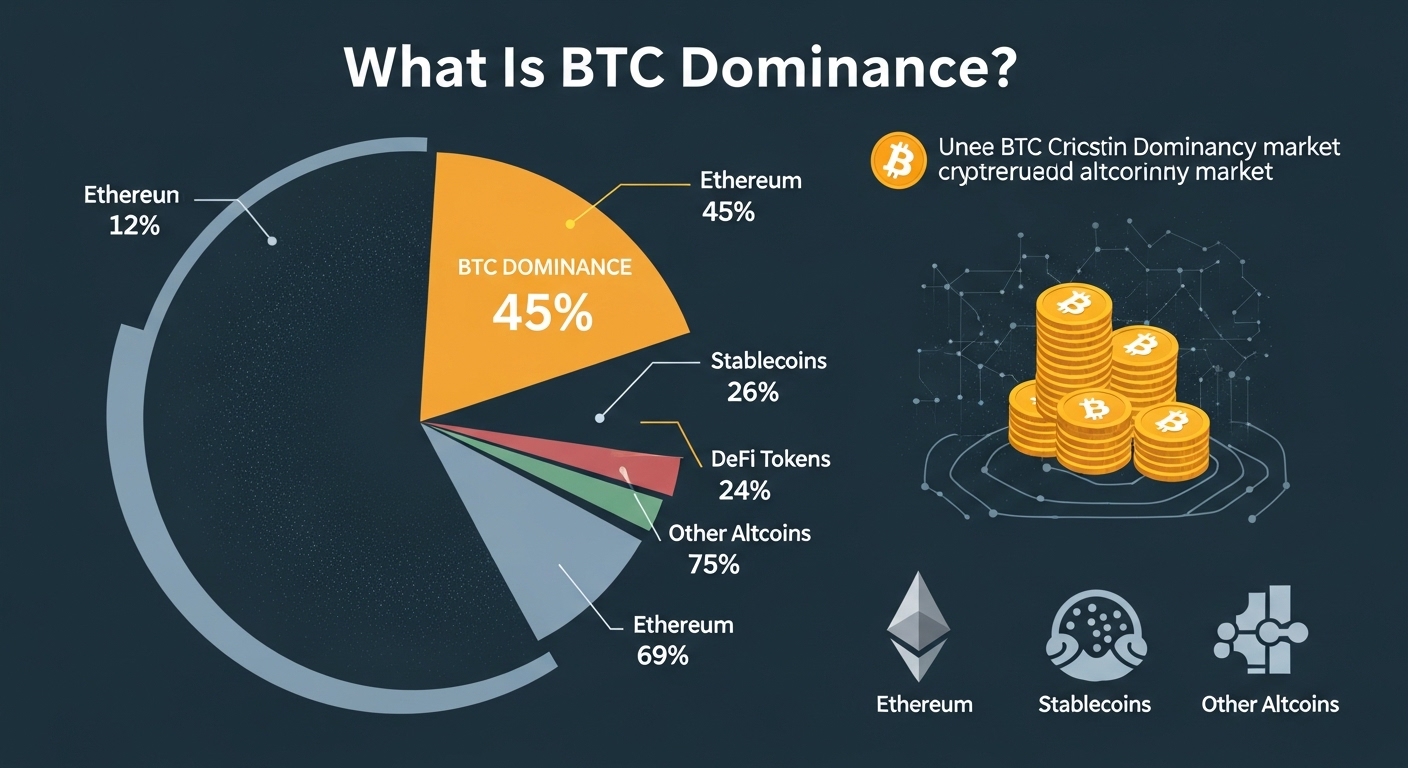
Bitcoin dominance is more than a simple metric; it reflects market psychology, capital allocation, and risk sentiment. In early-stage bull markets, investors typically accumulate Bitcoin first, viewing it as the safest digital asset. As confidence grows, funds rotate into altcoins, driving down BTC dominance.
The Historical Pattern of Altcoin Season
In previous cycles, a consistent pattern emerged:
.Bitcoin rallies strongly.
.BTC dominance peaks.
.Bitcoin consolidates.
.Capital rotates into altcoins.
Altcoins outperform Bitcoin for several weeks or months.During the 2017 cycle, for instance, Bitcoin dominance fell dramatically as altcoins like Ethereum and other large-cap tokens surged. Similarly, in 2021, dominance dropped sharply during the DeFi and NFT booms, signaling a powerful altcoin season.The key question now is whether the current BTC dominance breakdown is repeating that historical rhythm.
What a BTC Dominance Breakdown Really Signals
A breakdown in BTC dominance does not automatically confirm altcoin season. However, it often serves as a leading indicator.
Capital Rotation in Crypto Markets
When Bitcoin dominance declines, it typically means traders are reallocating profits into higher-risk assets. This capital rotation reflects increased confidence and speculative appetite. Altcoins, being more volatile, can produce outsized gains in shorter timeframes.The current BTC dominance breakdown suggests that investors may be diversifying away from Bitcoin after its recent strength. If sustained, this trend could mark the early phase of altcoin season.
Market Liquidity and Risk-On Behavior
Altcoin season thrives in environments characterized by expanding liquidity and strong retail participation. Falling BTC dominance often coincides with improving market sentiment, rising trading volumes, and renewed interest in decentralized finance, gaming tokens, and Layer-2 ecosystems.If liquidity remains supportive and macroeconomic pressures ease, the probability that altcoin season is beginning increases significantly.
Macro Factors Influencing the Shift
Cryptocurrency markets do not operate in isolation. Global macroeconomic conditions heavily influence capital flows.
Interest Rates and Monetary Policy
When central banks adopt accommodative monetary policies, risk assets tend to perform well. Lower interest rates and quantitative easing increase liquidity, benefiting speculative sectors like crypto.If monetary tightening slows or reverses, investors may seek higher returns in altcoins. This macro backdrop can accelerate a BTC dominance breakdown and support the argument that altcoin season is beginning.
Institutional Participation
Institutional investors often enter the crypto market through Bitcoin exposure first. Only after establishing core positions do they expand into altcoins. If institutional flows stabilize Bitcoin while retail investors chase higher returns elsewhere, dominance can decline rapidly.Monitoring institutional adoption trends can provide clues about the sustainability of a potential altcoin season.
On-Chain Metrics Supporting the Narrative
On-chain analytics offer deeper insights beyond price action.
Ethereum and Layer-2 Activity
In past altcoin seasons, network activity on Ethereum surged significantly. Increased transaction counts, rising gas fees, and growing decentralized application usage often preceded major altcoin rallies.If on-chain data shows rising activity across Layer-2 networks and DeFi protocols, it strengthens the thesis that altcoin season is beginning.
Stablecoin Flows and Exchange Balances
Stablecoin inflows to exchanges often signal buying power waiting on the sidelines. A simultaneous increase in altcoin accumulation and declining BTC dominance can confirm that capital rotation is active.Analyzing exchange reserves and wallet accumulation patterns can validate whether this breakdown is structural or temporary.
Sentiment Indicators and Market Psychology
Sentiment plays a pivotal role in determining whether altcoin season is beginning.
Social Media and Retail Interest
Retail traders often fuel altcoin rallies. Spikes in search trends, increased social engagement, and growing online discussions about smaller-cap tokens frequently coincide with dominance declines.When speculative narratives resurface — such as AI tokens, gaming projects, or meme coins — they often catalyze broader altcoin participation.
Fear and Greed Index
A rising crypto Fear and Greed Index typically reflects growing confidence. During greed phases, traders move further along the risk curve, favoring altcoins over Bitcoin. If greed levels expand alongside a BTC dominance breakdown, the probability of altcoin season increases.
Risks That Could Invalidate the Altcoin Season Thesis

While a BTC dominance breakdown is a strong signal, it is not foolproof.
False Breakdowns and Market Traps
Markets frequently produce false technical signals. If Bitcoin resumes upward momentum sharply, dominance could rebound quickly. In such cases, altcoins may underperform, and the anticipated altcoin season could fail to materialize.
Regulatory Uncertainty
Regulatory crackdowns disproportionately impact altcoins compared to Bitcoin. Uncertainty around securities classifications or exchange compliance can suppress altcoin momentum even during favorable dominance trends.
Liquidity Constraints
Altcoin season requires strong liquidity. If global markets experience tightening conditions or risk-off sentiment returns, speculative capital may retreat rapidly.
Comparing Current Conditions to Previous Cycles
To determine whether altcoin season is beginning, historical comparisons are essential.
Market Structure Differences
Unlike previous cycles, today’s crypto market includes broader institutional participation, more sophisticated derivatives markets, and deeper liquidity pools. These structural changes may alter the intensity and duration of altcoin season.Additionally, sector diversification — including DeFi, NFTs, gaming, and AI tokens — creates multiple sub-cycles within the broader market.
Bitcoin ETFs and Structural Demand
The introduction of spot Bitcoin exchange-traded products has created consistent structural demand for Bitcoin. This may limit the severity of BTC dominance declines compared to prior cycles.However, once ETF-driven demand stabilizes, speculative capital could rotate into altcoins more aggressively.
Sector Rotation Within Altcoin Season
Altcoin season is rarely uniform. Different sectors outperform at different stages.
Large-Cap Altcoins Lead First
Historically, large-cap altcoins like Ethereum tend to move first. Once these assets establish momentum, mid-cap and small-cap tokens follow.
High-Risk Tokens Surge Later
Toward the later stages of altcoin season, speculative assets often experience parabolic moves. These phases are typically characterized by extreme volatility and rapid gains — but also sharp corrections.Understanding sector rotation can help investors assess whether altcoin season is beginning or nearing exhaustion.
Technical Analysis of BTC Dominance Breakdown
From a technical standpoint, a decisive breakdown below key support levels often signals a structural shift.If BTC dominance falls below long-term trendlines with increasing volume, the signal becomes stronger. However, confirmation requires sustained lower highs and lower lows on the dominance chart.Traders often wait for weekly candle closes to confirm a genuine breakdown rather than reacting to short-term volatility.
Is Altcoin Season Beginning Right Now?
The evidence suggests that early-stage signals are emerging. The BTC dominance breakdown hints at capital rotation, and sentiment is gradually improving. On-chain data shows growing network activity across multiple ecosystems.
However, confirmation requires sustained follow-through. A true altcoin season typically involves widespread outperformance across major alternative cryptocurrencies over several weeks.Investors should monitor:Sustained dominance decline.Rising altcoin market capitalization.Increasing trading volumes.Expanding retail participation.Supportive macroeconomic conditions.If these elements align, the argument that altcoin season is beginning becomes far stronger.
Conclusion
The question “Is altcoin season beginning?” cannot be answered with absolute certainty. However, the recent BTC dominance breakdown provides a compelling signal that capital rotation may be underway.Historical cycles show that falling Bitcoin dominance often precedes strong altcoin performance. Yet confirmation requires broader participation, sustained liquidity, and supportive macro conditions.
For traders and investors, this moment represents a critical inflection point. If the breakdown holds and sentiment continues to improve, the crypto market could enter a dynamic new phase marked by aggressive altcoin outperformance. If not, Bitcoin may reassert dominance, delaying altcoin season once again. The coming weeks will likely determine whether this is the start of a sustained altcoin rally or merely a temporary fluctuation in market structure.
FAQs
Q: What does BTC dominance mean in crypto markets?
BTC dominance measures Bitcoin’s share of the total cryptocurrency market capitalization. A decline often indicates capital rotating into altcoins.
Q: How do I know if altcoin season is beginning?
Altcoin season typically begins when Bitcoin consolidates, BTC dominance falls, and alternative cryptocurrencies consistently outperform Bitcoin.
Q: Does a BTC dominance breakdown guarantee altcoin gains?
No. While a BTC dominance breakdown is a strong indicator, confirmation requires sustained momentum and broader market participation.
Q: Which altcoins usually perform best during altcoin season?
Large-cap altcoins often lead first, followed by mid-cap and smaller tokens. Performance varies depending on market narratives and liquidity.
Q: How long does altcoin season typically last?
Altcoin season can last from several weeks to several months, depending on macro conditions, liquidity, and overall market sentiment.
Also More: Altcoin Season Index Surges in 2025 Rotation Ahead