Iran Conflict and Bitcoin Mining Hash Rate Outlook
Will the conflict in Iran impact Bitcoin mining hash rate? Explore risks, energy shocks, and network resilience in this in-depth analysis.


Geopolitical instability has always influenced financial markets, energy supply chains, and global infrastructure. In recent years, digital assets have increasingly become part of that equation. When tensions rise in energy-producing regions, investors begin to ask difficult questions about market volatility, supply disruptions, and technological resilience. One pressing concern now circulating among traders and analysts alike is: Will the conflict in Iran impact Bitcoin mining hash rate?
The relationship between geopolitics and cryptocurrency mining is more interconnected than many realize. Bitcoin mining depends heavily on electricity Iran Conflict and Bitcoin Mining availability, energy prices, regulatory policy, and hardware logistics. Iran has historically played a complex role in the global mining ecosystem due to its subsidized electricity rates and evolving regulatory stance toward crypto operations. If instability escalates, the implications could ripple beyond its borders, affecting global hash rate distribution, mining profitability, and overall Bitcoin network security.
To understand whether the conflict in Iran could materially influence the Bitcoin mining hash rate, we must examine Iran’s historical role in mining, the structure of global mining operations, energy economics, sanctions, and how resilient the Bitcoin network truly is.
Iran’s Role in the Global Bitcoin Mining Landscape
Iran emerged as a significant player in Bitcoin mining during periods of low global mining competition. Subsidized electricity prices made it economically attractive for miners seeking lower operational costs. At certain points, estimates suggested Iran accounted for a measurable portion of global hash power, although precise figures have always been difficult to verify due to informal and off-grid operations.
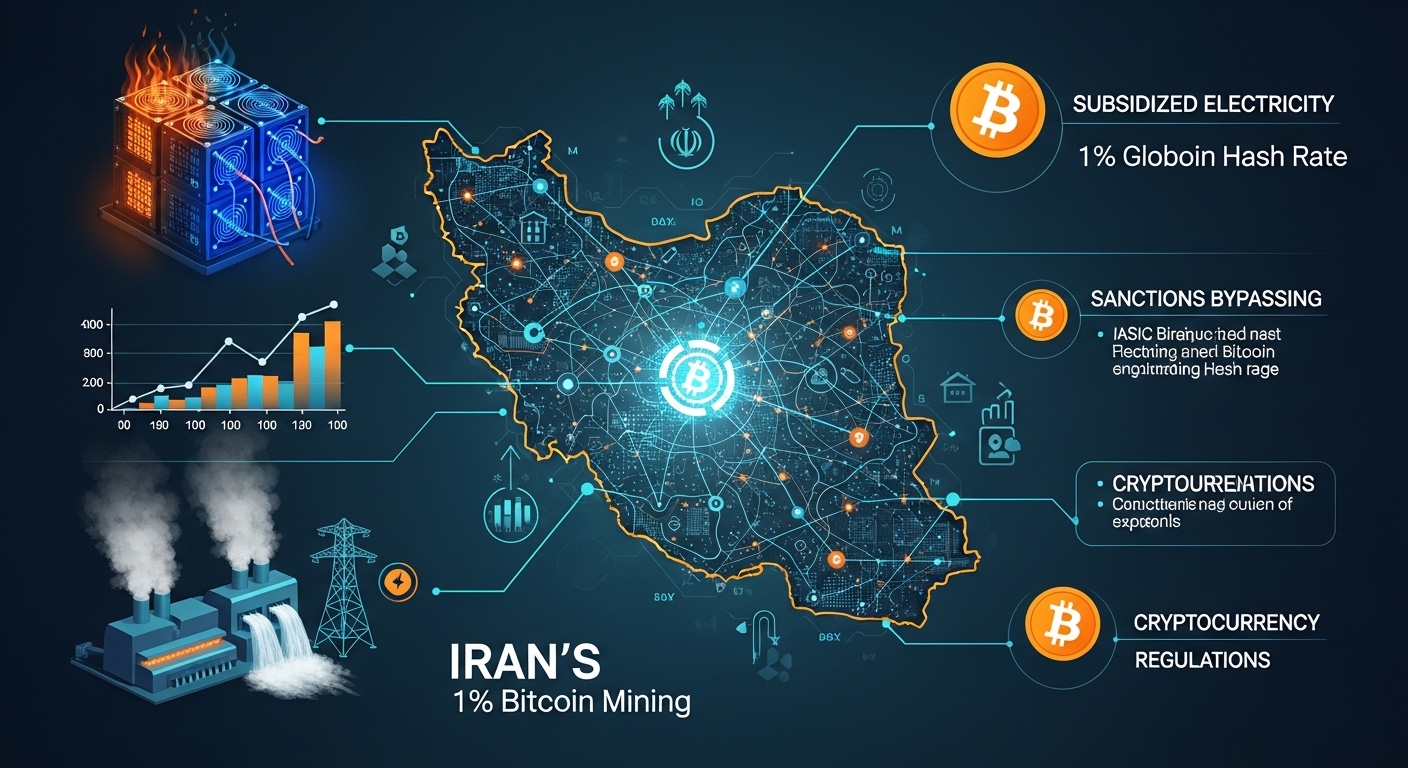
The central question—will the conflict in Iran impact Bitcoin mining hash rate—requires understanding how much of the global computational power actually resides within the country. While Iran has hosted both licensed and unlicensed mining farms, its share of global hash rate has fluctuated considerably over time due to regulatory crackdowns, power shortages, and seasonal electricity rationing.
Mining in Iran has also been influenced by sanctions, which have shaped the country’s approach toward cryptocurrency as a potential economic workaround. Government policies have alternated between supportive licensing frameworks and strict enforcement actions against unauthorized miners. Therefore, even before geopolitical tensions rise, Iran’s mining contribution has never been entirely stable.
Understanding Bitcoin Mining Hash Rate
To assess potential impact, it is essential to clarify what the Bitcoin mining hash rate represents. Hash rate measures the total computational power securing the Bitcoin blockchain. A higher hash rate indicates more miners are participating, increasing network security and difficulty. A lower hash rate suggests miners are going offline, potentially reducing block production speed temporarily until difficulty adjusts.
The Bitcoin protocol automatically recalibrates mining difficulty roughly every two weeks. This self-adjusting mechanism is crucial when evaluating the question: will the conflict in Iran impact Bitcoin mining hash rate in a lasting way, or would any disruption simply be temporary?
If a portion of miners in Iran were forced offline due to power outages, infrastructure damage, or regulatory shutdowns, the immediate effect would be a short-term dip in hash rate. However, Bitcoin’s difficulty adjustment algorithm would eventually restore equilibrium, maintaining block times near the ten-minute target.
Energy Infrastructure and Geopolitical Risk
Energy is the backbone of cryptocurrency mining. Iran’s mining operations rely heavily on fossil fuel-based electricity, often benefiting from government-subsidized rates. In times of conflict, energy infrastructure becomes vulnerable. Damage to power plants, transmission lines, or fuel supply chains could disrupt mining operations significantly.
However, the global Bitcoin mining industry has diversified substantially over the past decade. Major mining hubs now exist in North America, Central Asia, parts of Europe, and Latin America. This geographic dispersion reduces the systemic risk associated with any single country’s instability.
If the conflict in Iran impacts Bitcoin mining hash rate, the effect would likely be proportional to Iran’s share of global mining activity at that moment. Given that mining has increasingly shifted toward regions with stable regulatory environments and large-scale industrial facilities, Iran’s relative influence has diminished compared to earlier years.
Sanctions, Compliance, and Hardware Supply Chains
Another dimension to consider is the effect of international sanctions and trade restrictions. Iran already faces limitations in accessing advanced mining hardware from leading manufacturers. Escalation of conflict could further restrict import channels, reducing the country’s ability to maintain or expand mining capacity.
Modern mining relies on specialized ASIC machines produced by companies such as major Chinese and global hardware manufacturers. Restricted access to these supply chains would gradually reduce Iran’s competitiveness in the global mining ecosystem.
Even if the conflict in Iran impacts Bitcoin mining hash rate locally, global mining operations elsewhere continue to upgrade hardware and expand facilities. Over time, hash power tends to migrate toward jurisdictions offering political stability, reliable electricity, and regulatory clarity.
Short-Term vs Long-Term Impact on Hash Rate
Immediate Disruptions
In the short term, geopolitical escalation can trigger abrupt mining shutdowns. Power rationing, curfews, or infrastructure instability may force operators to halt operations. This could cause a temporary decline in global hash rate metrics.
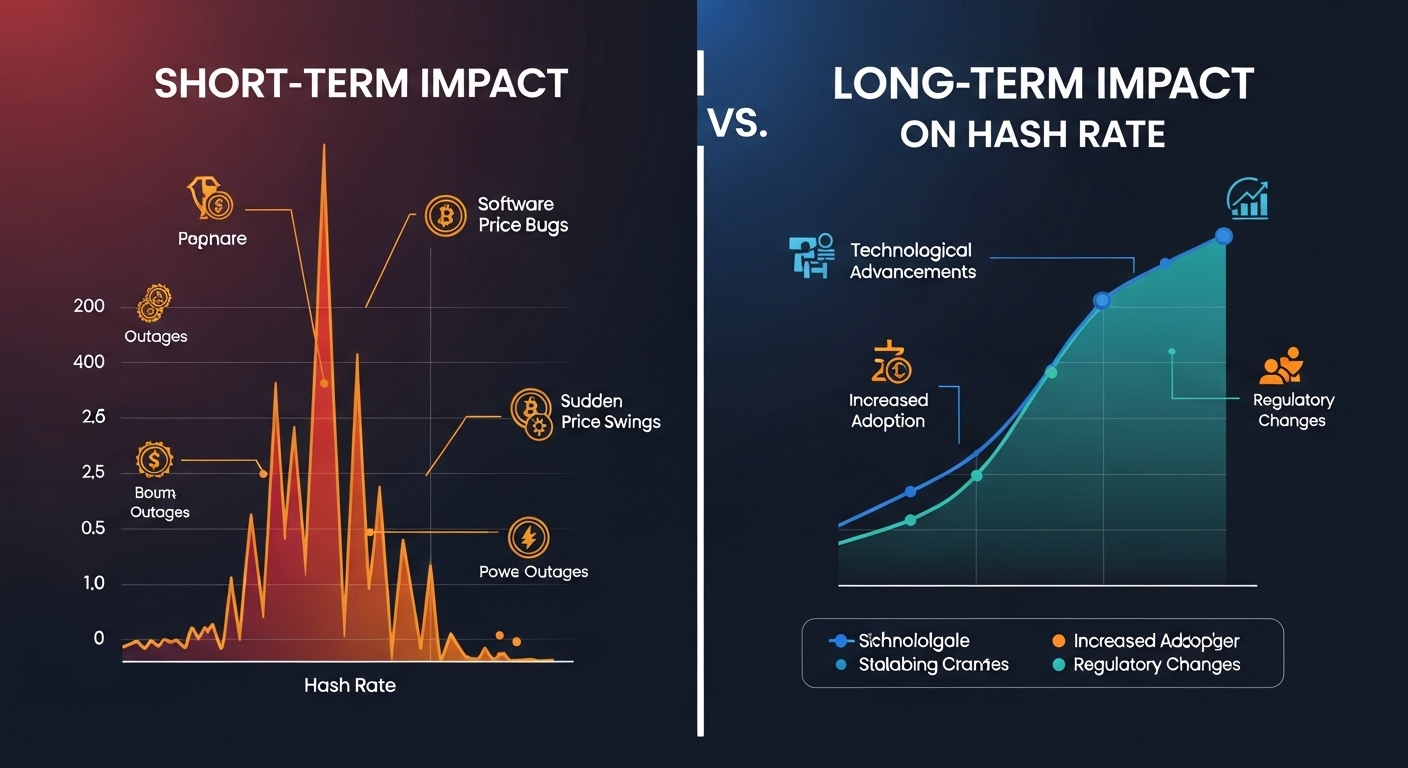
Markets often react swiftly to such data. A sudden drop in hash rate might influence investor sentiment, especially if accompanied by heightened volatility in oil prices and global equities. Traders may speculate that the conflict in Iran will impact Bitcoin mining hash rate in a way that undermines network security, even if that concern is overstated.
Structural Resilience
Long-term impact is a different matter. Bitcoin has endured significant hash rate shocks before. When major mining jurisdictions imposed bans or regulatory crackdowns, the network experienced short-term declines but eventually recovered as miners relocated.
The decentralized architecture of Bitcoin is specifically designed to absorb regional disruptions. Hash power redistributes rather than disappears entirely. Mining equipment is portable, and capital flows toward favorable energy markets.Therefore, while the conflict in Iran might impact Bitcoin mining hash rate in the short term, historical precedent suggests the network would adjust and recover over time.
Global Energy Markets and Mining Economics
Conflict in energy-rich regions often drives oil and gas price volatility. Higher global energy prices can indirectly affect Bitcoin mining profitability worldwide. If electricity costs rise in multiple jurisdictions due to global market disruptions, marginal mining operations may become unprofitable.This introduces a broader dimension to the question: will the conflict in Iran impact Bitcoin mining hash rate globally through energy markets rather than direct local shutdowns?
Mining profitability depends on the relationship between Bitcoin’s price and operational expenses. If energy costs spike while Bitcoin’s market value remains flat or declines, weaker miners may exit the network. This could cause a temporary contraction in global hash rate, not limited to Iran.However, mining companies increasingly seek renewable energy sources, stranded energy assets, and long-term fixed-rate contracts to hedge against volatility. These strategies mitigate systemic risk stemming from geopolitical energy disruptions.
Regulatory Uncertainty and Government Policy
Governments under economic pressure may alter their stance on cryptocurrency mining. In some cases, authorities could restrict mining to preserve domestic electricity for essential services. In others, governments might encourage mining as a revenue-generating activity.
Iran’s policy history reflects this tension. During periods of energy shortages, authorities have curtailed mining operations to stabilize the grid. Escalating conflict could intensify such measures.Yet from a global perspective, regulatory risk is distributed. If Iran tightens restrictions, miners may seek friendlier jurisdictions. The Bitcoin mining hash rate is inherently dynamic, moving in response to regulatory arbitrage.
Market Sentiment and Investor Psychology
The narrative surrounding geopolitical events can sometimes exert a stronger influence than the underlying fundamentals. Headlines asking whether the conflict in Iran will impact Bitcoin mining hash rate can amplify uncertainty.
Bitcoin markets are sensitive to macroeconomic news, including geopolitical risk, inflation data, and central bank policy. If investors perceive rising instability in key energy-producing regions, they may reassess risk exposure across asset classes, including cryptocurrencies.However, Bitcoin is often described as a hedge against geopolitical instability. In certain scenarios, conflict could increase interest in decentralized assets, potentially offsetting negative sentiment related to mining disruptions.
Network Security and Decentralization
The security of the Bitcoin network depends on aggregate hash rate and its distribution. A geographically concentrated mining base presents systemic risks. Over time, mining has become more geographically diversified, enhancing resilience.
If the conflict in Iran impacts Bitcoin mining hash rate by removing a portion of global hash power, the network remains protected as long as the majority of computational power remains operational elsewhere. The cost of a coordinated attack remains prohibitively high.Moreover, the difficulty adjustment mechanism ensures that block production stabilizes even after significant disruptions. This built-in adaptability reinforces confidence in the network’s long-term security.
Conclusion
So, will the conflict in Iran impact Bitcoin mining hash rate? The answer is nuanced. In the short term, localized disruptions to Iran’s mining infrastructure could temporarily reduce global hash rate figures. Power outages, regulatory crackdowns, or infrastructure damage would likely force some miners offline.
However, the long-term structural impact on the Bitcoin mining hash rate appears limited. The network’s decentralized architecture, automatic difficulty adjustment, and geographic diversification provide strong resilience against regional shocks. Even if Iran’s contribution declines, mining activity elsewhere can absorb the gap over time.
More broadly, the indirect effects of geopolitical instability—particularly through global energy markets—may have a wider influence on mining economics than localized disruptions alone. Ultimately, Bitcoin’s design anticipates volatility and adapts to it, reinforcing its durability in the face of geopolitical uncertainty.
FAQs
Q: What is Bitcoin mining hash rate?
Bitcoin mining hash rate measures the total computational power used to validate transactions and secure the blockchain network. Higher hash rates generally indicate stronger network security.
Q: How much of global mining occurs in Iran?
Iran’s share of global mining has fluctuated over time due to regulatory shifts and energy policies. While significant at certain points, it represents only a fraction of total global hash power today.
Q: Can a regional conflict shut down the Bitcoin network?
No. Bitcoin is decentralized across many countries. Even if one region experiences disruptions, the network continues operating, and difficulty adjusts automatically.
Q: How do energy prices affect mining?
Mining profitability depends heavily on electricity costs. Rising global energy prices can reduce margins and potentially cause less efficient miners to exit the network.
Q: Is Bitcoin vulnerable to geopolitical risk?
Bitcoin can experience short-term volatility due to geopolitical events, but its decentralized structure and adaptive protocol design make it resilient over the long term.
Also More: Iran’s $7.78B Crypto Shadow Economy Boom