The cryptocurrency market is undergoing a structural transformation as corporates and exchanges rush to stake Ethereum instead of selling their holdings. In previous market cycles, digital asset treasuries often liquidated large portions of their crypto reserves during volatility. Today, however, the narrative has shifted. Rather than offloading ETH to manage balance sheet risk or lock in profits, institutional players are increasingly embracing Ethereum staking as a long-term capital strategy.
This evolution reflects broader changes within the Ethereum ecosystem, particularly after the network’s transition to proof-of-stake (PoS). By enabling holders to earn yield while supporting blockchain security, staking has created a compelling incentive structure. For corporates seeking predictable returns and exchanges aiming to enhance customer engagement, staking offers recurring income without sacrificing core exposure to Ethereum’s price appreciation.
The shift also carries significant implications for market liquidity, supply dynamics, and long-term valuation models. As corporates and exchanges rush to stake Ethereum instead of selling, circulating supply tightens, reinforcing bullish fundamentals. This article explores the economic rationale behind this trend, its impact on the broader crypto market, and what it means for investors navigating the next phase of digital asset adoption.
Why Selling ETH Is No Longer the Default
Historically, crypto treasury management focused on capital preservation and liquidity. Companies holding digital assets often treated them as speculative investments. During market downturns, selling was considered prudent risk management. However, as corporates and exchanges rush to stake Ethereum instead of selling, a different philosophy is emerging.
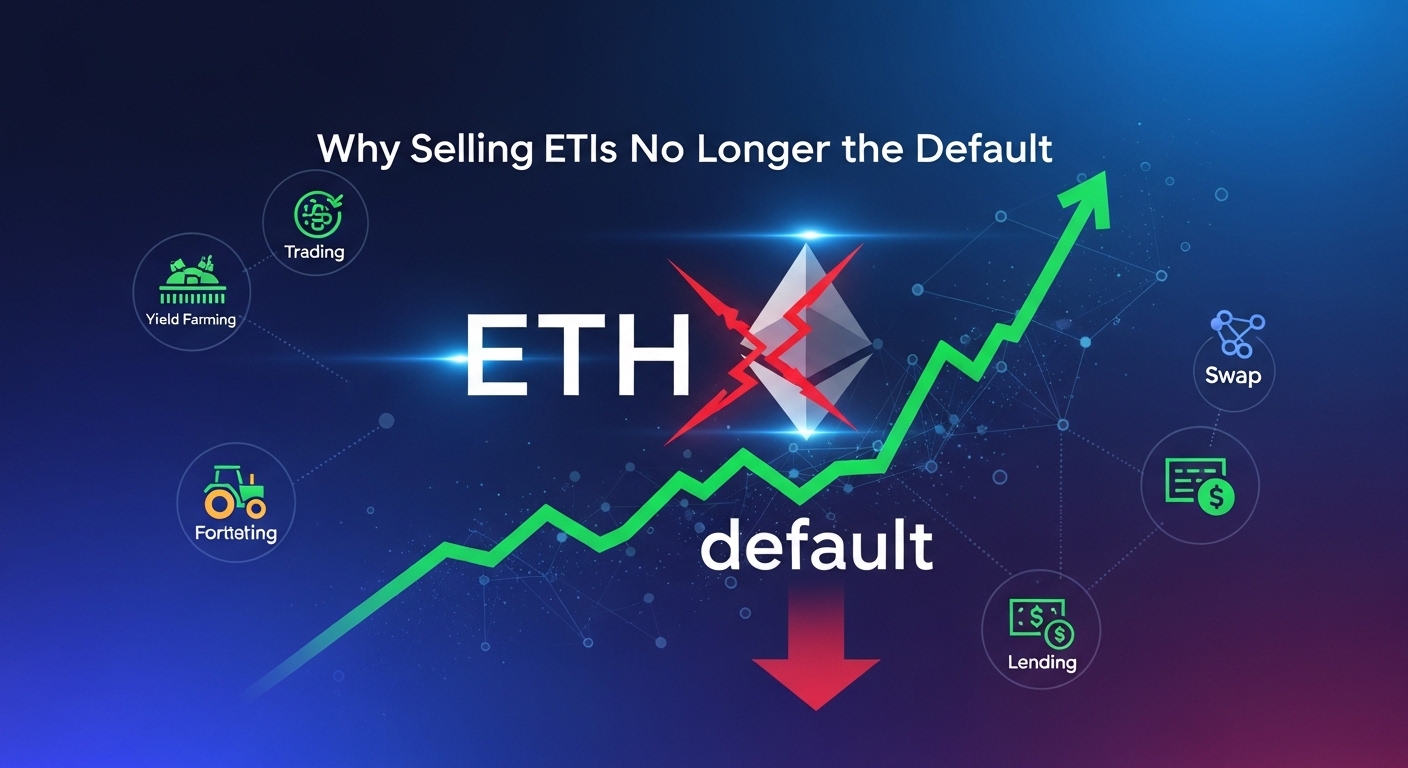
Ethereum staking transforms idle assets into productive capital. Rather than remaining passive holdings, ETH becomes yield-generating infrastructure. This fundamental shift aligns with traditional financial logic, where capital allocation aims to maximize return on assets.
Yield Generation in a Low-Interest Environment
Global macroeconomic conditions have played a pivotal role. With fluctuating interest rates and uncertain bond yields, Ethereum staking presents an alternative income stream. Staking rewards, derived from validator participation and transaction fees, provide a relatively stable yield compared to volatile equity markets.
Corporations that understand digital assets not merely as speculative vehicles but as programmable financial instruments see staking as a form of decentralized fixed income. This reframing encourages long-term holding behavior rather than short-term liquidation.
Enhanced Treasury Efficiency
When corporates and exchanges rush to stake Ethereum instead of selling, they optimize treasury efficiency. Staked ETH remains an appreciating asset while simultaneously generating rewards. This dual-benefit structure resembles dividend-paying equities, except that returns are algorithmically distributed through blockchain consensus.
For exchanges, staking services create additional revenue streams through commission fees while strengthening platform stickiness. Users are more likely to keep assets on exchanges that offer seamless staking solutions, further reinforcing institutional participation.
Ethereum’s Proof-of-Stake Model as the Catalyst
The transformation would not have been possible without Ethereum’s migration from proof-of-work to proof-of-stake. The network’s shift dramatically reduced energy consumption while introducing validator-based security mechanisms.
Under proof-of-stake, validators lock ETH to participate in block validation. In return, they earn rewards proportional to their stake. This mechanism aligns economic incentives with network security, creating a sustainable model that appeals to corporate governance standards.
Reduced Sell Pressure and Supply Contraction
As corporates and exchanges rush to stake Ethereum instead of selling, the available liquid supply decreases. Staked ETH is effectively removed from active circulation, reducing market sell pressure. Combined with Ethereum’s burn mechanism introduced through fee reforms, supply dynamics become increasingly deflationary.This structural tightening supports long-term price resilience. Investors monitor staking ratios closely because higher staking participation often correlates with stronger network confidence and reduced speculative churn.
Security and Institutional Confidence
Institutional adoption depends heavily on network stability. Ethereum’s proof-of-stake architecture enhances security through economic penalties for malicious behavior. Slashing conditions ensure validators act honestly, reinforcing trust in the system.Corporates value predictable governance structures. By staking ETH, they become active participants in network security rather than passive observers, further deepening institutional commitment.
Exchanges Lead the Charge in Ethereum Staking

Centralized exchanges have become major staking facilitators. By offering custodial staking services, they simplify participation for retail and institutional clients alike. As corporates and exchanges rush to stake Ethereum instead of selling, exchanges play a dual role: validators and intermediaries.
Revenue Diversification
Transaction fee competition has pressured exchange margins. Staking services provide an alternative revenue model. By taking a percentage of staking rewards, exchanges monetize dormant balances while encouraging longer asset retention.This strategy transforms exchanges from simple trading platforms into comprehensive digital asset ecosystems. Yield generation, lending services, and staking collectively redefine the exchange business model.
Strengthening User Retention
When customers stake ETH on exchanges, assets remain locked for extended periods. This reduces withdrawal activity and increases user retention. Exchanges benefit from predictable asset under management (AUM), stabilizing operational planning.The decision to stake rather than sell reflects confidence not only in Ethereum but in the broader decentralized finance landscape.
Corporate Treasuries Embrace Long-Term Ethereum Exposure
Beyond exchanges, publicly traded companies and private firms are reevaluating crypto treasury strategies. Rather than liquidating during volatility, some corporations treat Ethereum as a strategic reserve asset.
Balance Sheet Implications
Staking rewards introduce recurring revenue streams that can be recorded as income, depending on accounting frameworks. This shifts ETH from being a volatile intangible asset to a yield-generating digital commodity.Financial officers increasingly analyze staking returns relative to traditional asset classes. As corporates and exchanges rush to stake Ethereum instead of selling, internal financial modeling incorporates blockchain yield assumptions alongside bonds and equities.
Alignment with Web3 Strategy
Corporations involved in Web3, gaming, fintech, and decentralized applications often hold ETH for operational reasons. Staking aligns financial incentives with technological integration. By supporting the Ethereum network, these companies strengthen the infrastructure underpinning their own products.This strategic alignment reduces the likelihood of sudden liquidation events that historically destabilized crypto markets.
Market Impact: Liquidity, Volatility, and Price Dynamics
The decision by corporates and exchanges to stake rather than sell has systemic effects. Reduced circulating supply influences liquidity metrics and order book depth.
Lower Volatility Through Reduced Liquid Supply
While staking reduces immediate sell pressure, it can also compress liquidity. Lower available supply may amplify price movements during demand surges. However, long-term holders tend to exhibit lower panic-selling tendencies, potentially stabilizing market cycles.As more ETH becomes staked, price discovery increasingly reflects long-term conviction rather than short-term speculation.
The Psychological Signal to Retail Investors
When corporates and exchanges rush to stake Ethereum instead of selling, retail investors interpret this as a bullish signal. Institutional confidence often drives retail sentiment. Visible staking growth metrics reinforce perceptions of network strength.This feedback loop can contribute to sustained upward momentum during favorable macro conditions.
Regulatory and Risk Considerations
Despite the optimism, staking is not without regulatory scrutiny. Different jurisdictions classify staking rewards differently, raising questions about taxation and securities law.Corporates must navigate compliance frameworks carefully. Transparent reporting, custody standards, and risk disclosures remain critical components of responsible participation.Slashing risk, validator downtime, and smart contract vulnerabilities also require robust risk management strategies. Exchanges typically mitigate these risks through infrastructure redundancy and insurance mechanisms.
Competitive Landscape Among Staking Providers
As corporates and exchanges rush to stake Ethereum instead of selling, competition among staking providers intensifies. Native staking, liquid staking protocols, and exchange-based staking models coexist within a dynamic ecosystem.
Liquid staking introduces tokenized representations of staked ETH, enhancing capital efficiency. While corporates may prefer direct staking for governance control, exchanges often integrate liquid staking to provide flexibility.The competitive environment drives innovation in validator infrastructure, custody security, and reward optimization strategies.
Long-Term Outlook for Ethereum Staking Adoption
Looking ahead, the structural shift toward staking is likely to persist. As Ethereum continues scaling improvements and expands decentralized finance capabilities, staking becomes central to network economics.Higher staking participation may gradually transform ETH into a hybrid asset combining characteristics of technology infrastructure and yield-bearing securities. This hybridization attracts diverse investor profiles, from hedge funds to corporate treasuries.If corporates and exchanges continue to rush to stake Ethereum instead of selling, supply scarcity could intensify over the next cycle. Long-term valuation models increasingly factor in staking ratios and burn rates as core metrics.
Conclusion
The trend where corporates and exchanges rush to stake Ethereum instead of selling marks a pivotal moment in crypto market maturation. What was once a speculative asset is evolving into a yield-generating digital infrastructure component. Staking aligns financial incentives with network security, reduces circulating supply, and signals institutional confidence.
Exchanges benefit from diversified revenue streams and enhanced customer retention. Corporations optimize treasury performance while reinforcing their commitment to Web3 innovation. The broader market experiences reduced sell pressure and potentially stronger long-term fundamentals.
As Ethereum’s proof-of-stake framework continues to mature, staking may become the dominant strategy for institutional ETH holders. The decision to stake rather than sell reflects a fundamental belief in Ethereum’s durability and its expanding role in global digital finance.
FAQs
Q: Why are corporates and exchanges choosing to stake Ethereum instead of selling?
They seek recurring staking rewards, long-term price exposure, and improved treasury efficiency while supporting network security.
Q: How does staking Ethereum reduce sell pressure?
Staked ETH is locked in validator contracts, reducing circulating supply and limiting immediate liquidation potential.
Q: Is Ethereum staking risky for corporations?
Risks include validator downtime, slashing penalties, and regulatory uncertainty, but these can be mitigated through professional infrastructure and compliance planning.
Q: Do exchanges benefit financially from staking services?
Yes, exchanges typically earn commissions on staking rewards and increase asset retention on their platforms.
Q: Could increased staking impact Ethereum’s price?
Higher staking participation may reduce liquid supply and signal strong network confidence, potentially supporting long-term price appreciation.
Also More: Crypto Market Today Bitcoin & Ethereum Rebound