Altcoin ETFs XRP & Solana Shine in Turmoil
Altcoin ETFs tracking XRP and Solana stay green as crypto markets wobble. Explore inflows, risks, and what this shift means for traders and investors.

The cryptocurrency market is navigating one of its most unpredictable phases in years. Bitcoin and Ethereum continue to dominate headlines, yet their price action has grown erratic, and institutional flows have been inconsistent. Despite this turbulence, a surprising trend has emerged that has caught the attention of traders, analysts, and financial institutions. Altcoin ETFs XRP. Altcoin ETFs, including XRP and Solana, have remained firmly in the green, showing strength even as broader market sentiment wavers. This phenomenon has quickly become a focal point for investors who recognize that altcoin exchange-traded funds are evolving from speculative side bets into important financial instruments that offer exposure to high-growth digital ecosystems.
The resilience of XRP and Solana ETFs during this uncertain period is particularly noteworthy because it signals more than temporary enthusiasm. It reflects a structural shift in how both retail and institutional investors approach alternative cryptocurrencies. Instead of relying solely on spot markets or on-chain exposure, many are gravitating toward regulated ETF products that offer the familiarity of traditional financial markets
These vehicles provide a simple way to participate in the price movements of leading altcoins without the operational challenges of managing digital wallets or navigating complex exchange infrastructures. As crypto regulation becomes clearer in multiple regions and as global investment firms expand their digital asset offerings, altcoin ETFs appear positioned to play a greater role in the next phase of crypto adoption.
What follows is an in-depth exploration of why XRP and Solana ETFs are performing strongly amid volatility, how regulatory developments are shaping demand, and why these funds may influence market dynamics in 2025 and beyond. Each section explains the underlying drivers step by step, presenting a comprehensive narrative of how altcoin ETFs are gaining traction in a world where uncertainty often dictates market behavior.
Altcoin ETFs and Their Growing Importance
Altcoin ETFs are financial products designed to track the performance of cryptocurrencies other than Bitcoin and Ethereum. An ETF format makes these assets accessible through traditional brokerages, retirement accounts, and institutional investment platforms. Their importance is rising because they combine two worlds that historically operated in silos: the innovation of blockchain-based networks and the structure of regulated finance.
For many investors, an altcoin ETF represents a bridge. It offers exposure to the high-growth potential of tokens like XRP and Solana while eliminating the need to manage private keys or interact with crypto-specific infrastructure. This accessibility has become a significant advantage at a time when regulatory requirements, security concerns, and custodial challenges continue to shape the digital asset landscape.
Another reason altcoin ETFs matter now more than ever is that traditional crypto investing has matured. The early years of the market were dominated by Bitcoin and later Ethereum. Although both continue to serve as foundational assets, many investors now recognize that blockchain technology encompasses far more than these two giants. The demand for diversified exposure has created a strong case for ETFs that track networks with unique use cases, whether it be cross-border payments in the case of XRP or high-performance decentralized applications in the case of Solana.
As global financial institutions deepen their involvement in digital assets, regulated products become essential building blocks. The infrastructure surrounding altcoin ETFs provides comfort to risk-averse investors while offering a new avenue for capital allocators looking for growth beyond Bitcoin. This combination of accessibility, safety, and upside potential explains why altcoin ETFs have become an important component of the broader crypto investment ecosystem.
Why XRP and Solana Remain at the Front of the Altcoin ETF Wave
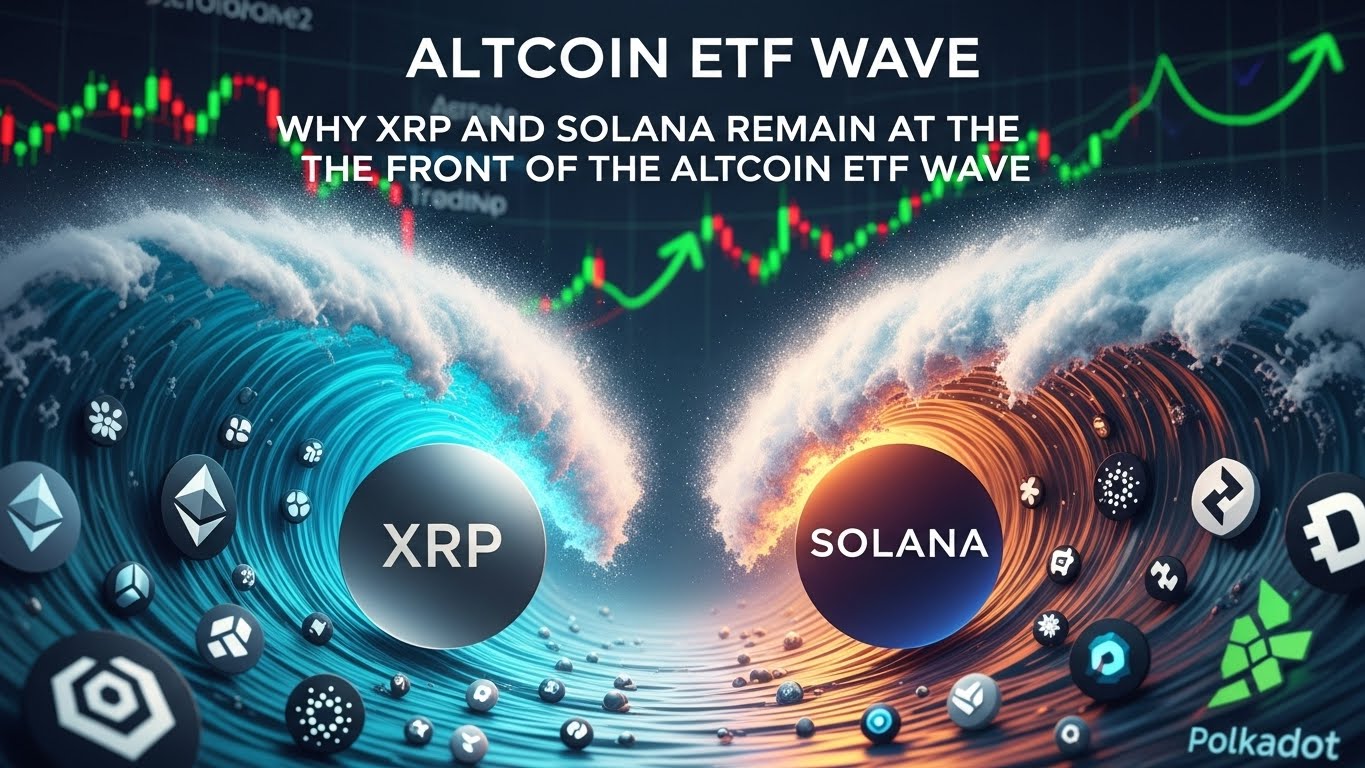
XRP and Solana have captured the spotlight among altcoin ETFs because they represent two distinct narratives within the blockchain space. XRP is closely associated with cross-border payments and institutional settlement. Its ecosystem has positioned itself as a competitor to legacy systems like SWIFT, promising faster, cheaper, and more transparent transactions across global financial networks. As a result, XRP attracts investors who seek exposure to real-world utility rather than purely speculative metrics.
Solana, on the other hand, has gained recognition as one of the fastest and most scalable blockchain networks. It supports decentralized finance, non-fungible tokens, gaming applications, and high-throughput decentralized exchanges. Its technological performance and vibrant ecosystem have made it appealing to those who believe that the next generation of blockchain innovation will come from platforms that provide both speed and low fees.
These contrasting narratives complement each other in the ETF market. The regulatory progress surrounding XRP in particular has boosted investor confidence, especially after a series of legal developments that clarified aspects of its classification and use. Meanwhile, Solana has benefited from its expanding developer community and high network activity, making it attractive to individuals seeking exposure to blockchain growth stories.
When these ecosystems are wrapped in ETF form, they become even more attractive. Investors see them as opportunities to participate in high-potential markets while relying on the structure and safety of traditional financial instruments. This dual appeal helps explain why XRP and Solana ETFs have performed strongly even during periods of broad market uncertainty.
The Resilience of XRP and Solana ETFs Amid Market Volatility
During unpredictable market cycles, capital usually retreats to what is familiar or proven. Yet XRP and Solana ETFs have remained exceptions to this rule. Their continued growth during market instability reveals several deeper dynamics that extend beyond short-term price action.
One of these dynamics is the ongoing rotation of capital within the crypto ETF ecosystem. Investors who have already allocated to Bitcoin and Ethereum ETFs are seeking the next frontier of opportunity. This search for higher potential returns leads naturally to altcoin ETFs, particularly those backed by large-cap networks with strong liquidity and visibility. XRP and Solana fit this profile perfectly, making them logical candidates for investors diversifying their crypto ETF portfolios.
Another factor contributing to their resilience is the perception of undervaluation. Many market participants believe that XRP and Solana offer more room for long-term appreciation compared with Bitcoin, which is increasingly viewed as a mature asset with slower growth potential. The market sees XRP as a promising cornerstone for institutional finance and Solana as a leading force in high-performance decentralized applications. These expectations amplify the appeal of investing through ETFs, which combine growth narratives with regulatory structure.
It is also important to recognize how media coverage influences ETF inflows. News stories highlighting the relative strength of XRP and Solana ETFs during volatile periods create a feedback loop where positive visibility attracts new investment. This combination of attention, opportunity, and accessibility allows XRP and Solana ETFs to remain in the green even when market sentiment is neutral or negative.
Regulatory Developments Shaping Altcoin ETF Momentum
Regulation is one of the most significant forces affecting altcoin ETF growth. The evolving stance of government agencies has shaped the timing of approvals, investor confidence, and overall market structure. While some regions have moved cautiously, others have embraced crypto ETFs as part of their financial frameworks.
In the United States, the regulatory landscape continues to shift. Bitcoin and Ethereum ETFs have already laid the groundwork for broader crypto acceptance. However, altcoin ETF proposals face more scrutiny due to differing token classifications and the diversity of underlying technologies. Still, the wave of filings from major financial institutions reflects serious demand. The involvement of top-tier asset managers signals that altcoin ETFs are transitioning from experimental concepts into mainstream investment tools.
Outside the United States, jurisdictions such as Europe, Canada, and parts of Asia have adopted a more progressive approach. Multiple exchanges already list physically backed XRP and Solana products, providing a preview of how these ETFs may function in wider global markets. These international approvals have created competitive pressure on markets where regulators have been slower to respond, and they have also given investors early access to structured exposure to leading altcoins.
Regulatory milestones often correlate directly with market performance. Each step toward greater clarity or approval tends to generate renewed optimism, prompting inflows into altcoin ETFs. This dynamic helps explain why XRP and Solana ETFs remain strong performers in a mixed regulatory climate. Investors recognize that regulatory acceptance tends to unlock institutional capital, which can have a sizable impact on the long-term price trajectory of the underlying assets.
The Strategic Appeal of Altcoin ETFs for Institutional Investors
Institutional investors have historically been cautious about entering the crypto market due to concerns over custody, compliance, and operational risks. Altcoin ETFs solve many of these challenges by offering a regulated, exchange-listed product that adheres to rigorous reporting and security standards. This creates an environment where institutions can engage with digital assets in a framework aligned with their internal policies.
The strategic appeal of XRP and Solana ETFs for institutions lies in their ability to offer diversified exposure. Institutions that already hold Bitcoin ETFs are exploring ways to expand their digital asset portfolios without compromising regulatory compliance. XRP provides an entry point into the world of global payment infrastructure, while Solana offers exposure to a high-performance network with significant developer activity. Together, they create a diversification strategy that supports both innovation and stability.
Institutional demand is also influenced by macroeconomic factors. In times of uncertainty, institutions tend to seek assets with asymmetric upside potential. XRP and Solana, both of which have strong ecosystem foundations and growing real-world traction, present compelling opportunities for such strategies. ETF wrappers further enhance this appeal by providing audited holdings, standardized valuation methods, and established custody practices.
The Risks Behind the Momentum of XRP and Solana ETFs
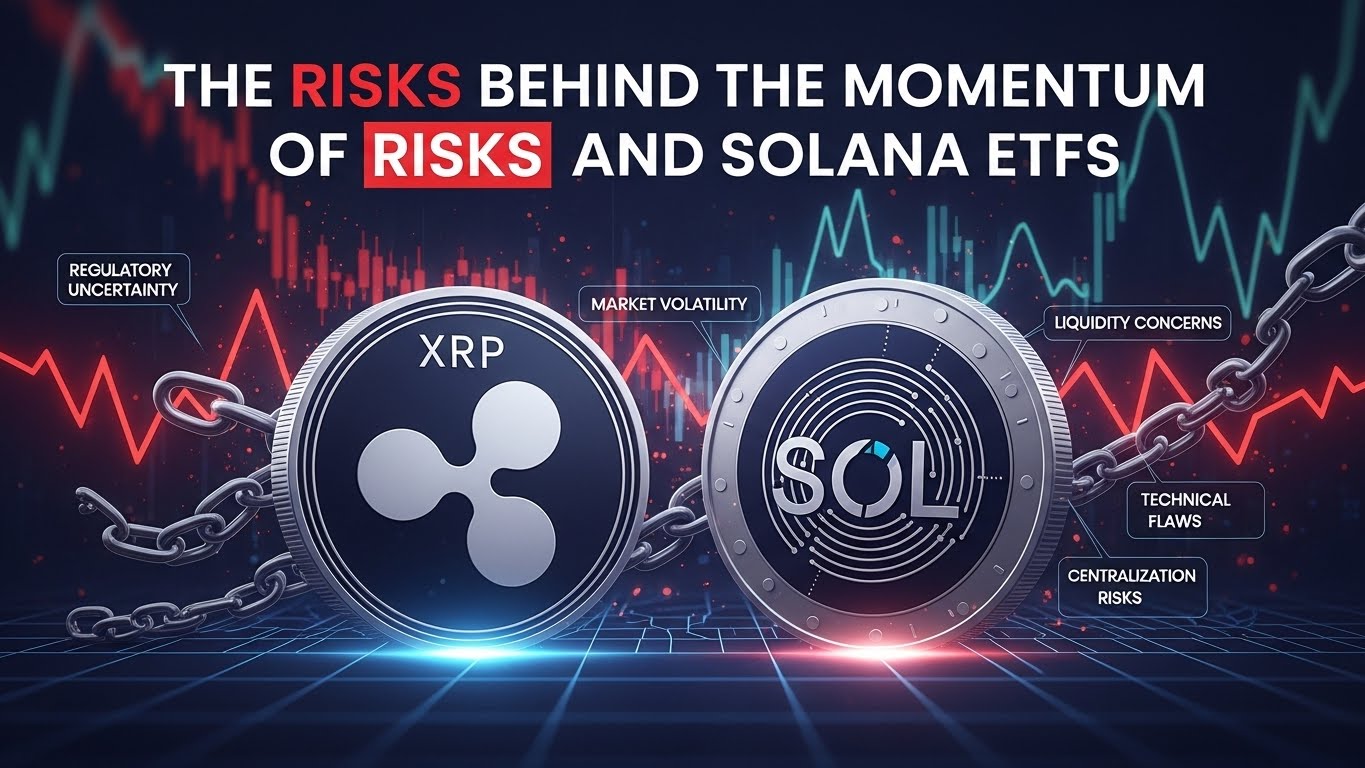
Despite their growing popularity, XRP and Solana ETFs are not free from risks. Crypto remains a volatile market, and altcoins often experience sharper price swings than more established cryptocurrencies. These movements can impact ETF share prices directly, potentially causing quick and unexpected losses for unprepared investors.
Regulatory risks are equally important to consider. The legal classification of altcoins continues to evolve, and any negative regulatory decision could affect the viability of ETF products or restrict institutional access. Liquidity risks also come into play because altcoin ETFs depend on sufficient trading volume and reliable market makers to maintain their price stability. If liquidity dries up during a period of market stress, ETFs may temporarily trade at premiums or discounts relative to the value of their underlying assets.
Technological risks must also be acknowledged. Solana, despite its impressive speed, has faced network outages in the past. XRP, while stable, remains closely tied to global regulatory compliance and the continued expansion of cross-border payment use cases. These uncertainties do not eliminate the long-term potential of the assets, but they highlight the importance of informed investment strategies.
Are XRP and Solana ETFs Indicating an Upcoming Altcoin Season?
The continued strength of XRP and Solana ETFs has sparked debate among analysts about whether the market is entering an altcoin season. Traditionally, an altcoin season refers to a period when alternative cryptocurrencies outperform Bitcoin by a wide margin. The consistent inflows into XRP and Solana ETFs during unstable market conditions suggest that investors are positioning themselves for broader altcoin growth.
Whether this trend evolves into a full altcoin season will depend on regulatory developments, macroeconomic shifts, and the continued execution of the underlying networks. However, the structural inflows into altcoin ETFs indicate that capital rotation is already underway. The increasing presence of XRP and Solana in institutional portfolios further strengthens the argument that altcoins are becoming integral components of diversified crypto investment strategies.
What the Strength of XRP and Solana ETFs Means for the Future
The consistent performance of XRP and Solana ETFs in a turbulent market signals a pivotal change in the crypto investment landscape. These products demonstrate that the market is moving beyond the binary focus on Bitcoin and Ethereum. Investors are now seeking exposure to blockchain technologies with unique functionality, real-world utility, and innovative ecosystems.
Altcoin ETFs offer a regulated, accessible way to engage with these networks, ensuring they remain attractive even when market sentiment is uncertain. Their growing popularity is shaping how capital flows into the crypto ecosystem, influencing liquidity patterns, institutional allocation strategies, and long-term market structure.
The future of altcoin ETFs appears promising. As regulation continues to evolve and as more investment firms introduce XRP, Solana, and multi-asset crypto ETFs, both retail and institutional investors will have more tools at their disposal to participate in the digital asset economy. The resilience of these products during market turbulence suggests that they will play an important role in the next chapter of crypto adoption.