Bitcoin Dominance Bleeds, But Altcoin Season Delayed
Bitcoin dominance is dropping, but analysts say altcoin season isn’t here yet. Explore why the market remains cautious and what signals matter next.


The crypto market has entered a complex and transitional phase. Bitcoin dominance has been drifting lower, Bitcoin’s price is under pressure, and many alternative cryptocurrencies are showing hints of strength. On the surface, this environment should resemble the early stages of the traditional altcoin rotation that typically follows a strong Bitcoin rally. Bitcoin Dominance Bleeds. However, despite the declines in dominance and pockets of altcoin outperformance, market observers maintain that a true altcoin season is still on hold.
Bitcoin dominance represents Bitcoin’s share of the entire crypto market’s capitalization. When dominance falls, it usually indicates a growing appetite for higher-risk assets such as altcoins. In previous cycles, significant drops in Bitcoin dominance were often accompanied by explosive surges in altcoin valuations. Yet this time, even with dominance weakening, several signals suggest that the conditions for a genuine altcoin season have not yet materialized.
Recent data shows Bitcoin’s dominance dropping from its cycle highs while the total altcoin market cap holds steady or slowly climbs. Even so, broader altcoin indexes and season indicators remain below the levels traditionally associated with a full-scale altseason. This creates a disconnect between what the dominance metric seems to imply and how the overall market is behaving. this contradiction requires examining what dominance actually measures, how altcoin seasons typically unfold, and why this cycle is showing a different version of that pattern.
Bitcoin Dominance and Why It Matters
Bitcoin dominance is a simple yet powerful indicator. It measures Bitcoin’s market capitalization relative to the total value of all cryptocurrencies combined. When dominance rises, Bitcoin is outperforming the rest of the market. When it falls, altcoins are gaining ground or maintaining strength even if Bitcoin is retreating.
Traders and analysts use the dominance chart as a sentiment gauge because it reveals capital rotation within the crypto ecosystem. A rising dominance environment usually points to risk aversion, where investors prefer the relative safety and liquidity of Bitcoin. A falling dominance trend indicates growing risk appetite and a willingness to explore altcoins with higher volatility and potential for greater returns.
What makes the current situation interesting is that Bitcoin dominance is falling while Bitcoin’s price is also declining. This combination tells us that capital is not simply leaving the market altogether. Instead, some of it is rotating into altcoins or holding steady in altcoin positions, creating a slow bleed in dominance without the dramatic explosion in altcoin prices associated with past altseasons.
Why Bitcoin Dominance Is Bleeding Even As Price Declines
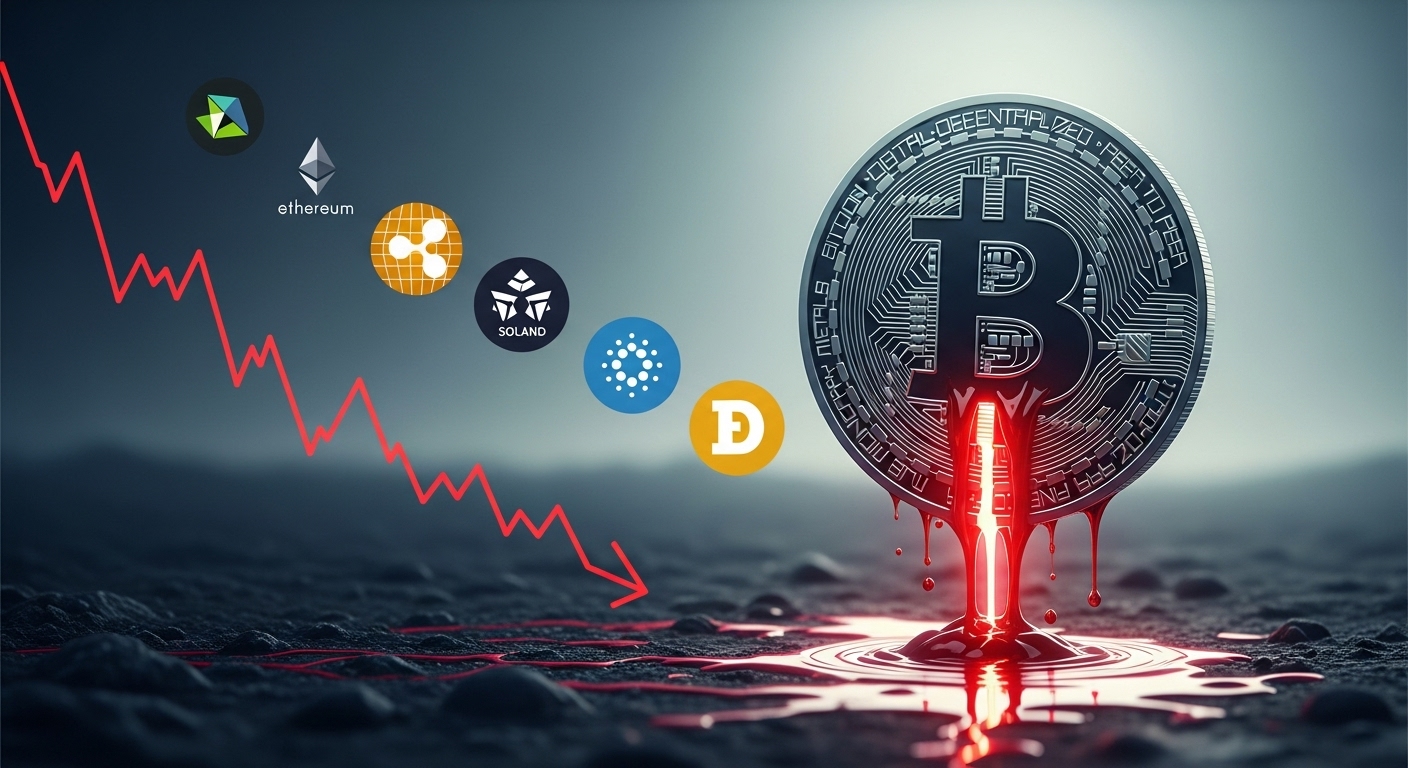
Several factors explain why Bitcoin dominance is weakening despite Bitcoin itself trending downward. One of the most important is the resilience of certain altcoins, which have retained a sizable portion of their market capitalization even during Bitcoin’s corrections. When Bitcoin drops sharply while altcoins fall more slowly or stabilize after an initial dip, dominance naturally declines.
Another major factor comes from institutional influences. The rise of Bitcoin ETFs has created a new class of investors who allocate specifically to BTC rather than the broader crypto market. This structural demand supports Bitcoin’s long-term value but may reduce the scale of rotational flows that typically fuel altcoin rallies. Institutions tend to remain anchored to Bitcoin, which can limit the kind of aggressive diversification that historically accelerated altseasons.
Macro uncertainty also plays a significant role. Interest rate expectations, inflation patterns, and global economic signals continue to shape crypto risk appetite. Even though Bitcoin dominance is bleeding, the macro environment has not yet fully shifted into a high-risk mode where traders aggressively seek exposure to speculative altcoins. This hesitation slows the pace of capital rotation, creating an environment where dominance declines gradually rather than collapsing into the low-40% range that marked previous altcoin supercycles.
Why Altcoin Season Is Still Considered On Hold
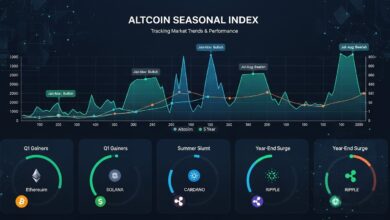
The phrase “altcoin season” has a specific meaning within the crypto community. It is not simply a period when a few altcoins rise. Instead, it describes a broad market environment where most large and mid-cap altcoins outperform Bitcoin consistently over a period of weeks or months. One common measure for determining altseason is the Altcoin Season Index, which signals a true altseason when at least three-quarters of the top 50 or 100 altcoins outperform Bitcoin over a rolling ninety-day period.
At present, this threshold has not been met. Although dominance is slipping, many altcoins are still highly correlated with Bitcoin’s downward movements. When Bitcoin experiences a sharp pullback, altcoins often drop harder in both USD prices and BTC pairs. This dynamic is the opposite of what occurs during a real altseason, where Bitcoin’s consolidation phases allow altcoins to climb independently and set new highs relative to BTC.
Even though a few standout altcoins are performing well, the performance is not broad-based enough to meet the criteria for a sustained altseason. Liquidity remains uneven across sectors, and many lower-cap altcoins show thin trading volumes, limited inflows, and sporadic bursts of activity rather than consistent growth.
These conditions create an environment where traders sense that a rotation is building but cannot yet confidently declare that the market has entered a full altcoin season.
Historical Comparisons and Why This Cycle Looks Different
To understand why analysts say altcoin season is on hold, it helps to compare today’s market structure with past cycles. During the 2017 and early 2018 altseason, Bitcoin dominance collapsed as capital flooded into new ICO tokens. In 2020 and 2021, major altseasons aligned with the explosion of DeFi, NFTs, and rapid innovation on competing Layer 1 networks. In both cases, dominance fell into the mid-30% to low-40% range, coinciding with prolonged altcoin rallies.
In the current cycle, Bitcoin dominance remains significantly higher. Even after recent declines, it hovers close to the high-50% zone. This suggests that although altcoins are gaining ground, Bitcoin still holds an outsized share of the total market. As long as dominance remains in this range, the conditions resemble a transitional period rather than a definitive altcoin takeover.
Additionally, retail participation appears less aggressive compared with previous altseasons. Retail enthusiasm is often necessary to create the type of widespread altcoin mania that drives exponential gains across multiple sectors. Without a surge in retail speculation, altcoin rallies remain more muted and selective.
Signals That Could Indicate the Start of Altcoin Season

Although altcoin season has not yet arrived, several signals could confirm its beginning once they align. A deeper and sustained breakdown in Bitcoin dominance toward the low-50% or mid-40% region would be a strong sign that capital is rotating more aggressively away from Bitcoin. A consistent rise in the Altcoin Season Index above the standard threshold would also confirm that most altcoins are outperforming BTC rather than only a few isolated categories.
Market observers also watch for sustained strength in altcoins during periods when Bitcoin is either flat or slightly declining. In past altseasons, Bitcoin entered consolidation phases after major rallies, allowing liquidity and speculative interest to flow into alternative assets. If Bitcoin stabilizes at a predictable support range while altcoins begin pushing higher in both USD and BTC valuations, the conditions would more closely resemble a traditional altcoin season.
Macro sentiment could also act as a major catalyst. A shift toward lower interest rates or stronger risk-on behavior in global markets would likely stimulate greater participation in high-volatility assets, giving altcoins a more favorable environment to outperform.
How Traders Are Navigating the Current Environment
With Bitcoin dominance bleeding but altcoin season still on hold, many traders are adopting strategic, balanced approaches. Some are focusing on fundamentally strong altcoins with clear utility, active development, and real user adoption. This approach helps investors avoid the extreme volatility and false breakouts that often characterize early or premature altcoin rotations.
At the same time, many traders maintain core Bitcoin allocations because of its dominance, liquidity, and role as the primary gateway for institutional capital. This strategy provides stability during uncertain cycles while still allowing traders to capture potential upside from altcoins that show early signs of leadership.
Another common approach is scaling into altcoin positions gradually rather than going all-in based on the early signals. Since altcoin season depends heavily on broad market confirmation, disciplined entry strategies help reduce risk if dominance rebounds and Bitcoin reasserts control over the market.
See More: Bitcoin Trendline Breakdown What Key Indicators Reveal
Risk Management During a Phase of Bleeding Dominance
Risk management becomes especially important when Bitcoin dominance is declining during a period of price weakness. Altcoins tend to experience sharper volatility than Bitcoin, and premature attempts to front-run an altseason can lead to significant drawdowns. Traders often emphasize patience and gradual allocation rather than chasing speculative surges unsupported by broader market conditions.
Market participants also spend more time analyzing liquidity depth, project fundamentals and relative strength against BTC pairs. These factors help identify which altcoins may outperform if a genuine altseason begins and which might lag or fail even during favorable conditions.
The current environment rewards research, careful selection, and measured risk-taking rather than impulsive trading based on narrative alone.
Conclusion
The crypto market is sending mixed signals. Bitcoin dominance is bleeding with price, indicating a shift in capital flows and growing interest in altcoins. At the same time, the broader indicators that define a true altcoin season remain below key thresholds. Analysts continue to argue that while early-stage rotation is happening, the market has not yet reached the point where altcoins can sustain long-term outperformance without Bitcoin’s direct support.
This period calls for patience, preparation, and strategic positioning. The next altcoin season may be forming quietly beneath the surface, but until dominance breaks decisively lower and altcoins show consistent relative strength, the market remains in a transitional phase.
When the signals finally align, altcoin season could begin with speed and intensity, as it has in previous cycles. For now, traders are watching closely, recognizing the potential ahead but remaining aware that the market has yet to flip the final switch.