Bitcoin Mining Difficulty Sees Biggest Drop in 6 Months
Bitcoin mining difficulty records its sharpest drop in six months, signaling shifting miner economics, network dynamics, and future price implications.


The Bitcoin Mining Difficulty Sees Biggest mechanism sits at the core of Bitcoin’s self-regulating design, ensuring that new blocks are produced at a predictable pace regardless of fluctuations in computational power. When mining difficulty shifts sharply, it signals deeper structural changes within the Bitcoin network, reflecting miner behavior, energy economics, hardware efficiency, and broader market sentiment. Recently, Bitcoin mining difficulty posted its sharpest drop in six months, drawing renewed attention from miners, investors, analysts, and policymakers alike.
This decline is not merely a technical footnote buried in blockchain metrics. Instead, it represents a meaningful inflection point in the relationship between hashrate, miner profitability, and Bitcoin’s evolving economic model. Difficulty adjustments are automatic and apolitical, yet they often coincide with macroeconomic pressures, price volatility, and industry-wide consolidation trends. A sudden drop suggests that a notable portion of miners either powered down their machines or exited the network altogether, triggering questions about sustainability, decentralization, and future security.
In this article, we examine why Bitcoin mining difficulty fell so sharply, what it reveals about the current state of the mining industry, and how it may influence Bitcoin’s price dynamics and network health. By analyzing technical mechanics, economic pressures, and forward-looking scenarios, this deep dive provides a comprehensive, human-centered explanation of a development that could shape Bitcoin’s next chapter.
Understanding Bitcoin mining difficulty and why it matters
What Bitcoin mining difficulty actually measures
Bitcoin mining difficulty is a quantitative measure of how hard it is for miners to discover a new block and add it to the blockchain. The network targets a new block roughly every ten minutes. To maintain this cadence, the protocol adjusts difficulty every 2,016 blocks, which equates to approximately two weeks. When more miners join the network and total hashrate rises, blocks are found faster. The system responds by increasing difficulty.
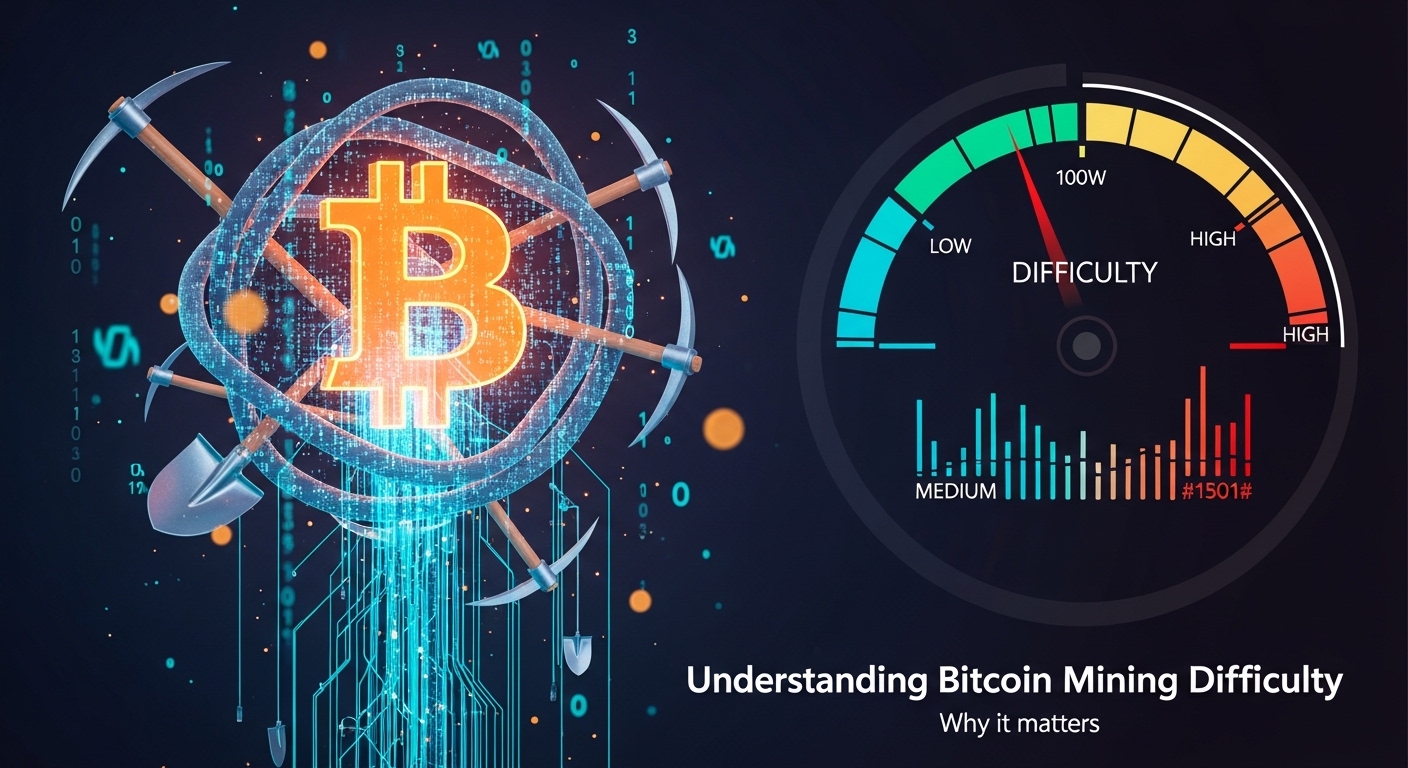
Conversely, when miners shut down operations and hashrate declines, blocks take longer to mine, prompting a difficulty reduction. This adaptive mechanism ensures network stability without requiring centralized oversight. Difficulty, therefore, functions as a real-time proxy for miner participation and network competitiveness. A sharp decline in difficulty implies a contraction in mining activity significant enough to disrupt the expected block production schedule.
Why difficulty changes influence network security
Mining difficulty is inseparable from Bitcoin’s security model. Higher difficulty generally correlates with greater cumulative hashrate, making the network more resistant to attacks. When difficulty falls, it does not automatically imply insecurity, but it does suggest reduced computational participation.
However, Bitcoin’s design anticipates these fluctuations. Even with a lower difficulty, the cost of executing a successful attack remains prohibitively high. The recent sharp drop in difficulty should be viewed as an economic signal rather than a structural vulnerability.
The sharpest drop in six months: what triggered it?
Miner capitulation under economic pressure
One of the primary drivers behind the recent difficulty decline is miner capitulation. As Bitcoin prices fluctuated while operational costs remained elevated, many miners faced shrinking profit margins. Electricity prices, particularly in regions dependent on fossil fuels or strained power grids, have remained stubbornly high.
When mining becomes unprofitable, especially for operators using older, less efficient ASIC hardware, shutting down machines becomes a rational decision. As enough miners exit simultaneously, the aggregate hashrate drops, forcing the protocol to reduce difficulty.
Hardware efficiency and lifecycle turnover
The mining industry is characterized by rapid technological obsolescence. Newer machines deliver higher hash output per unit of energy, rendering previous generations less competitive. During periods of price stagnation, miners operating legacy equipment are often the first to exit.
The recent difficulty drop likely reflects an accelerated phase of hardware turnover, where inefficient rigs were decommissioned en masse. This cleansing effect can temporarily reduce network participation while laying the groundwork for a more efficient mining ecosystem.
The relationship between hashrate, difficulty, and miner profitability
How falling difficulty impacts active miners
A reduction in Bitcoin mining difficulty directly benefits miners who remain active. With fewer competitors and an easier difficulty target, the probability of earning block rewards increases for each unit of hashpower deployed. This often leads to a short-term improvement in miner profitability, even if Bitcoin’s market price remains unchanged. Historically, difficulty drops have acted as relief valves, stabilizing the mining sector during periods of stress. Active miners gain breathing room, while marginal operators are filtered out.
Feedback loops between price and mining activity
Bitcoin’s price and mining difficulty exist in a feedback loop. Rising prices incentivize more mining, pushing difficulty higher. Falling prices discourage participation, leading to difficulty reductions. The recent sharp drop suggests that price signals were insufficient to sustain previous mining levels. However, this dynamic can reverse quickly. If price appreciation follows a difficulty decline, profitability can surge, drawing miners back and restoring equilibrium.
Macroeconomic factors shaping the current mining landscape
Energy markets and geopolitical pressures

Global energy markets have experienced persistent volatility, driven by geopolitical tensions, supply chain disruptions, and regulatory interventions. For energy-intensive industries like Bitcoin mining, these conditions translate directly into operational risk. Regions once considered mining havens due to cheap electricity have seen costs rise unpredictably. This uncertainty encourages miners to adopt a more cautious posture, scaling back operations when margins narrow.
Interest rates and capital availability
Higher interest rates have tightened access to capital across industries, including crypto mining. Expansion financed through debt has become more expensive, forcing miners to prioritize cash flow over growth. The recent difficulty decline reflects this capital discipline, as miners choose sustainability over aggressive expansion.
Bitcoin mining difficulty as a market sentiment indicator
Reading miner behavior as on-chain data
Miner decisions are among the most transparent economic signals available in Bitcoin’s on-chain data. Difficulty adjustments condense thousands of individual decisions into a single metric. A sharp drop indicates collective stress, caution, or strategic retrenchment.
Analysts often interpret difficulty declines as late-stage bearish signals or early-stage recovery markers, depending on broader context. The current six-month low invites close scrutiny of whether the market is approaching equilibrium.
Historical parallels and lessons
Past cycles show that significant difficulty drops often coincide with periods of market consolidation. Following such phases, the network typically reemerges stronger, with a more efficient cost structure and resilient participants. The present adjustment aligns with this historical pattern, suggesting that the mining sector is recalibrating rather than collapsing.
Implications for Bitcoin price dynamics
Short-term price correlations
In the short term, difficulty drops do not mechanically dictate price movements. However, they can influence sentiment. Traders may interpret miner exits as bearish, while others see reduced sell pressure from miners as bullish. When miners shut down unprofitable operations, they also reduce forced selling of newly minted Bitcoin, potentially easing downward price pressure.
Long-term structural effects
Over the long term, difficulty adjustments contribute to Bitcoin’s robustness. By automatically aligning incentives, the protocol ensures that mining remains viable across diverse economic conditions. The recent sharp drop may ultimately support price stability by preserving network participation among the most efficient operators.
Network decentralization and geographic redistribution
Shifts in mining geography
As difficulty falls, mining can become viable in regions previously marginal due to higher costs or regulatory friction. This dynamic promotes geographic redistribution, which can enhance decentralization. The current adjustment may encourage smaller or emerging mining operations to enter the network, counterbalancing recent consolidation trends.
Decentralization versus efficiency trade-offs
While larger operators benefit from economies of scale, difficulty reductions can level the playing field temporarily. This tension between efficiency and decentralization remains a defining feature of Bitcoin’s evolution.
Environmental considerations and sustainability narratives
Energy efficiency gains after difficulty drops
When inefficient miners exit, the average energy efficiency of the network improves. This can reduce the overall carbon footprint per unit of hashpower, strengthening arguments that Bitcoin mining incentivizes technological progress. The recent difficulty decline may therefore contribute to a more sustainable mining profile, even as total energy consumption fluctuates.
Renewables and adaptive mining strategies
Difficulty adjustments also intersect with renewable energy adoption. Flexible miners who can scale operations based on energy availability benefit disproportionately during periods of lower difficulty, reinforcing innovative grid-balancing use cases.
What the sharpest difficulty drop in six months means going forward
Signals for miners
For miners, the current environment rewards efficiency, prudent capital management, and strategic patience. Lower difficulty offers a window to rebuild margins and upgrade infrastructure without facing overwhelming competition.
Signals for investors and analysts
For investors, the difficulty drop serves as a reminder that Bitcoin’s fundamentals operate independently of short-term narratives. Monitoring mining metrics alongside price trends provides a more nuanced understanding of network health.
Conclusion
The moment when Bitcoin mining difficulty posts its sharpest drop in six months marks a critical recalibration point for the network. Far from indicating weakness, this adjustment underscores Bitcoin’s capacity to adapt automatically to economic realities. Miner exits, energy pressures, and capital constraints have converged to reduce hashrate, prompting the protocol to respond precisely as designed.
In the aftermath, remaining miners benefit from improved economics, the network becomes leaner and more efficient, and long-term resilience is reinforced. For observers, this episode highlights why Bitcoin’s incentive-driven architecture continues to function effectively, even amid volatility and uncertainty. As history suggests, periods of difficulty decline often precede renewed stability and growth, making this development one of the most important mining signals to watch in the current cycle.
FAQs
Q: Why did Bitcoin mining difficulty drop so sharply?
The sharp drop occurred because many miners shut down operations due to high energy costs, reduced profitability, and outdated hardware, causing overall network hashrate to fall.
Q: Does lower mining difficulty make Bitcoin less secure?
No. While difficulty declined, Bitcoin’s security model remains robust. Even at lower difficulty levels, executing an attack would still require immense resources.
Q: How does a difficulty drop affect miner profits?
Lower difficulty increases the chances of earning block rewards for active miners, often improving short-term profitability despite challenging market conditions.
Q: Is a difficulty drop bullish or bearish for Bitcoin price?
It can be interpreted both ways. In the short term, sentiment may turn cautious, but over the long term, difficulty drops often support healthier network economics.
Q: What should investors watch after a difficulty decline?
Investors should monitor hashrate recovery, energy market trends, and miner behavior alongside price action to assess whether the network is entering a stabilization phase.
Also More: Bitcoin miner Bitfarms exits Latin America with $30m sale to focus on AI