Bitcoin Mining Enters the Zetahash Era as Profits Tighten
Bitcoin mining enters the zetahash era as profitability tightens, reshaping miner strategies, hash rate growth, energy use, and network security.

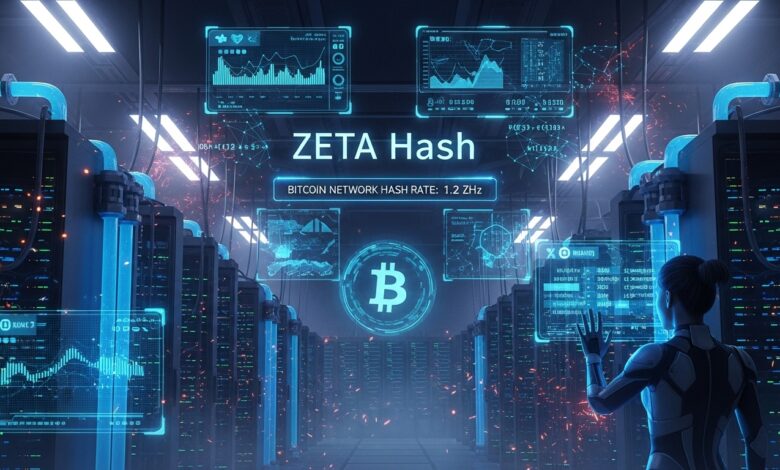
Bitcoin Mining Enters the Zetahash is undergoing one of the most important transitions in its history. As the network hash rate pushes into the zetahash era, miners around the world are facing unprecedented competition, shrinking margins, and structural changes that are redefining how the industry operates. The move toward zetahash-scale computing power is not just a technical milestone; it represents a fundamental shift in Bitcoin mining profitability, operational efficiency, and long-term sustainability.
In earlier years, Bitcoin mining was dominated by hobbyists and small-scale operators who could compete using consumer-grade hardware. Today, mining has evolved into a highly capital-intensive industry driven by industrial-scale data centers, specialized ASIC hardware, and access to ultra-low-cost energy. As the global hash rate climbs toward zetahash levels, miners must process more computations than ever before to earn the same block rewards.
This transition comes at a time when profitability is tightening due to rising difficulty, volatile Bitcoin prices, increasing energy costs, and the lingering effects of recent Bitcoin halving events. The combination of these forces is pushing miners to rethink their strategies, consolidate operations, and explore new technologies to survive in an increasingly competitive environment.This article explores what the zetahash era means for Bitcoin mining, why profitability is under pressure, how miners are adapting, and what this new phase could mean for the future of the Bitcoin network.
Understanding the Zetahash Era in Bitcoin Mining
What Is a Zetahash and Why It Matters
A zetahash represents one sextillion (10²¹) hashes per second. When applied to Bitcoin mining, it refers to the total computational power securing the Bitcoin network. Entering the zetahash era means the network is approaching or surpassing one zetahash per second in total hash rate, a level that was almost unimaginable just a decade ago.
This milestone highlights the immense scale of modern Bitcoin mining operations. Each additional increment of hash rate strengthens network security by making attacks exponentially more expensive. At the same time, it increases competition among miners, as more computational power is required to solve cryptographic puzzles and earn block rewards.The rise to zetahash levels reflects massive investments in mining infrastructure, advanced ASIC development, and energy optimization. However, it also signals that the easy days of mining are long gone.
Hash Rate Growth and Network Security
As the network hash rate grows, Bitcoin becomes more secure and resistant to attacks such as double-spending or 51% attacks. This is a positive development for the long-term stability of the blockchain. A higher hash rate means that altering transaction history would require an extraordinary amount of computing power and capital.

However, increased security comes at a cost. For individual miners, higher hash rates translate directly into higher mining difficulty, which reduces the probability of earning rewards unless they continuously upgrade hardware and expand operations. This dynamic creates a constant arms race within the mining sector.
Why Bitcoin Mining Profitability Is Tightening
Rising Mining Difficulty
One of the primary reasons Bitcoin mining profitability is tightening is the steady increase in mining difficulty. Difficulty adjusts approximately every two weeks to ensure that blocks are produced every ten minutes on average. As more miners join the network and deploy more powerful machines, difficulty rises accordingly.
In the zetahash era, difficulty levels are reaching historic highs. This means miners must expend more energy and computing resources for the same reward, compressing margins and increasing operational risk, especially for smaller or less efficient players.
Impact of Bitcoin Halving Events
Bitcoin halving events play a crucial role in shaping miner economics. With each halving, the block reward is reduced by 50%, directly cutting miner revenue unless offset by higher Bitcoin prices or transaction fees. Recent halvings have intensified the pressure on miners already struggling with rising costs.
In the current environment, many miners are operating with thinner margins than ever before. Those unable to achieve economies of scale or secure cheap energy sources are being forced out of the market, accelerating industry consolidation.
Energy Costs and Operational Expenses
Energy remains the single largest expense in Bitcoin mining. As global electricity prices fluctuate and regulatory scrutiny increases, miners face growing uncertainty around long-term energy access and pricing. Even minor increases in electricity costs can significantly impact profitability at scale.
In the zetahash era, energy efficiency has become a defining factor. Miners using older, less efficient hardware find it increasingly difficult to compete with modern facilities optimized for low-cost energy, advanced cooling systems, and high-performance ASICs.
The Evolution of Mining Hardware in the Zetahash Era
Advanced ASIC Technology
The transition to zetahash-level hash rates would not be possible without continuous innovation in ASIC mining hardware. Modern ASICs are far more powerful and energy-efficient than their predecessors, delivering higher hash rates per watt consumed.
Manufacturers are now focused on incremental efficiency gains, as dramatic leaps in performance are becoming harder to achieve. These improvements are critical for miners trying to remain profitable in a highly competitive environment where every efficiency advantage matters.
Hardware Obsolescence and Capital Pressure
Rapid technological advancement also means faster hardware obsolescence. Mining rigs that were profitable just a few years ago may no longer be viable today. This forces miners to reinvest capital frequently, increasing financial risk and favoring well-capitalized operators.Smaller miners often struggle to keep up with these upgrade cycles, leading to increased centralization as large mining firms dominate hash rate distribution.
Mining Pool Dynamics and Industry Consolidation
The Role of Mining Pools
As mining difficulty increases, solo mining becomes less practical. Most miners now rely on Bitcoin mining pools to combine hash power and receive more predictable payouts. Pools play a critical role in smoothing income volatility, especially in the zetahash era.
However, the concentration of hash power in a few large pools raises concerns about centralization and governance. While pools do not own miners’ hardware, their influence over transaction selection and block production is significant.
Consolidation Among Mining Companies
Tightening profitability is accelerating consolidation across the mining industry. Smaller operations are being acquired or forced to shut down, while larger firms expand through mergers, acquisitions, and infrastructure investments.This consolidation trend has both positive and negative implications. On one hand, it promotes efficiency and professionalization. On the other hand, it may reduce decentralization, a core principle of Bitcoin’s design.
Energy Innovation and Sustainability in Bitcoin Mining
Shift Toward Renewable Energy

In response to rising energy costs and environmental concerns, many miners are turning to renewable energy sources such as hydroelectric, solar, and wind power. Renewable energy can provide stable, low-cost electricity while improving the public perception of Bitcoin mining.In the zetahash era, sustainability is no longer optional. Miners that fail to address environmental impact may face regulatory challenges, higher costs, or reduced access to capital.
Waste Energy and Grid Stabilization
An emerging trend in Bitcoin mining involves utilizing stranded or wasted energy, such as excess natural gas from oil fields or surplus renewable power. By converting otherwise unused energy into economic value, miners can improve profitability while contributing to grid efficiency.This approach positions Bitcoin mining as a potential tool for energy optimization rather than a burden on power systems.
Regulatory Pressure and Geographic Shifts
Evolving Regulatory Landscape
Governments worldwide are paying closer attention to Bitcoin mining due to its energy consumption and economic impact. Regulations vary widely, with some jurisdictions welcoming miners and others imposing restrictions or outright bans.
In the zetahash era, regulatory clarity is becoming a competitive advantage. Miners operating in stable, supportive jurisdictions can plan long-term investments more effectively than those facing uncertain legal environments.
Global Redistribution of Hash Power
As regulations and energy economics change, hash power continues to migrate across borders. Regions offering cheap energy, favorable policies, and infrastructure support are emerging as new mining hubs.This geographic redistribution helps maintain Bitcoin’s global nature, even as individual regions experience shifts in mining activity.
The Role of Transaction Fees in Miner Revenue
Declining Block Rewards and Fee Dependence
As block rewards diminish over time, transaction fees are expected to play a larger role in miner revenue. In periods of high network activity, fees can provide meaningful income, partially offsetting reduced subsidies.In the zetahash era, miners are increasingly attentive to network usage trends and fee markets, as these factors will shape long-term profitability.
Long-Term Security Implications
A healthy fee market is essential for Bitcoin’s future security. If transaction fees fail to grow as block rewards decline, miners may reduce investment, potentially impacting network resilience. Understanding this balance is critical as Bitcoin matures.
Future Outlook: Is the Zetahash Era Sustainable?
Challenges Ahead for Miners
The zetahash era presents formidable challenges, including relentless competition, capital intensity, regulatory uncertainty, and environmental scrutiny. Only the most efficient and adaptable miners are likely to thrive in this environment.Yet, these pressures also drive innovation, pushing the industry toward better technology, cleaner energy, and more robust infrastructure.
Opportunities for the Bitcoin Network
For Bitcoin itself, the zetahash era represents strength and maturity. A highly secure network with global participation enhances Bitcoin’s role as a decentralized store of value and settlement layer.As weaker miners exit and stronger ones adapt, the network continues to evolve, reflecting market realities while maintaining its core principles.
Conclusion
Bitcoin mining’s entry into the zetahash era marks a defining moment in the evolution of the network. While rising hash rates strengthen security, they also intensify competition and squeeze profitability, forcing miners to adapt or exit. Tight margins, higher difficulty, and declining block rewards are reshaping the industry into a more professional, energy-conscious, and capital-intensive sector.
Despite these challenges, the zetahash era underscores Bitcoin’s resilience. Through innovation in hardware, energy sourcing, and operational efficiency, miners continue to secure the network and support its long-term viability. As the ecosystem matures, Bitcoin mining remains a cornerstone of decentralization, even as it navigates the realities of a rapidly changing economic landscape.
FAQs
Q: What does the zetahash era mean for Bitcoin mining?
The zetahash era refers to Bitcoin’s total network hash rate approaching or exceeding one zetahash per second, indicating massive computational power and increased competition among miners.
Q: Why is Bitcoin mining profitability tightening?
Profitability is tightening due to rising mining difficulty, reduced block rewards from halving events, higher energy costs, and intense competition at industrial scale.
Q: Can small miners survive in the zetahash era?
Small miners face significant challenges but can survive by joining mining pools, using efficient hardware, and accessing low-cost or renewable energy sources.
Q: How does higher hash rate affect Bitcoin security?
A higher hash rate strengthens Bitcoin’s security by making attacks more expensive and difficult, enhancing trust in the network.
Q: What role will transaction fees play in the future?
As block rewards decline, transaction fees are expected to become a more important source of miner revenue, supporting network security over the long term.
Also More: Bitcoin Mining Rebounds in China as Nation Climbs Back to Third Place Worldwide