Bitcoin Weakness Persists as Crypto Markets Stabilize
Bitcoin weakness persists despite crypto markets steadying after a harsh sell-off. Explore the reasons behind BTC’s slump and what may come next.

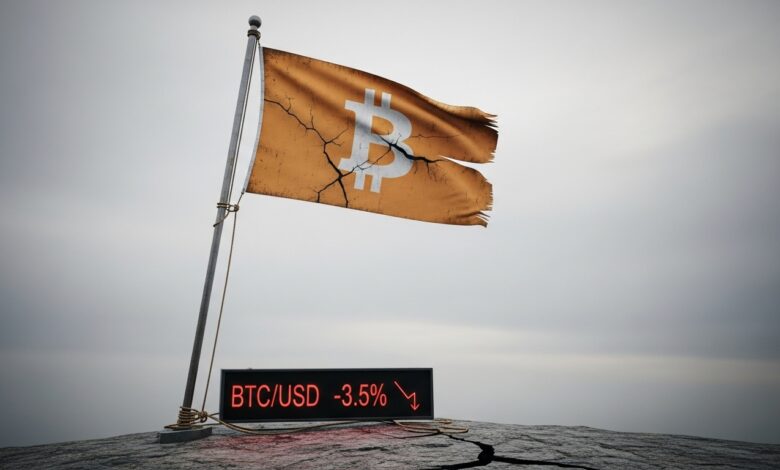
The past week delivered one of the most turbulent stretches in the recent history of digital assets. After soaring to new highs earlier this year, Bitcoin has spent the last several days struggling to regain its footing. Many traders were caught off guard by the depth of the pullback, while long-term investors continued to watch the situation unfold with a mixture of caution and curiosity. Although the broader cryptocurrency market has begun to stabilize, Bitcoin weakness persists, revealing the fragility of sentiment after such a dramatic decline.
This downturn did not occur in isolation. As global markets adjusted to fresh economic signals, shifting liquidity, and rapid changes in investor expectations, Bitcoin became a focal point of volatility. The crypto market as a whole has shown signs of steadiness, yet Bitcoin remains the asset most closely examined by traders seeking clarity. To understand why Bitcoin weakness persists even as crypto steadies after a bruising week, it’s important to look beyond price movements and dive into the underlying forces shaping the market’s behavior.
A Harsh Comedown From Record Highs
How the market shifted from euphoria to anxiety
Only weeks ago, Bitcoin was basking in its role as the dominant leader of the digital asset rally. Prices soared to unprecedented levels, and momentum appeared virtually unstoppable. This surge brought widespread optimism, especially as Bitcoin continued outperforming traditional assets and capturing significant attention among institutional investors. The crypto ecosystem expanded rapidly, with Ethereum, Solana, and other large-cap assets experiencing their own bursts of strength.
The reversal began slowly before accelerating sharply. Markets transitioned from a phase of exuberance to one defined by concern, with liquidity thinning and sellers increasing their presence. Bitcoin’s fall from record highs created ripple effects across the market, pulling traders into a defensive posture. The declining price triggered waves of long position liquidations, which further fueled volatility and amplified the downward movement. Even as other cryptocurrencies began establishing firmer ground, the weight of Bitcoin’s prior gains left it more vulnerable to steep declines.
A market adjusting after months of relentless momentum.
The magnitude of Bitcoin’s earlier rise created expectations of continued strength. When those expectations were challenged, the broader narrative shifted. Investors who had grown accustomed to rapid gains suddenly faced a market recalibrating under new conditions. This recalibration revealed vulnerabilities in both sentiment and market structure. Traders who had leveraged aggressively during the rally were among the first to feel the impact, as even a modest correction intensified into a dramatic cascade.
The decline also showed how closely Bitcoin is tied to macroeconomic indicators. Every adjustment in interest rate expectations, every shift in equity markets, and every hint of changes in liquidity conditions created new pressures. As a result, Bitcoin’s downturn became a reflection not only of internal crypto dynamics but also of broader financial stress. Even as some altcoins began stabilizing, Bitcoin continued to absorb the brunt of the uncertainty, reinforcing the perception that Bitcoin’s weakness persists even in a recovering crypto market.
Factors Behind the Bruising Week for Crypto

Rising interest rates and global risk-off sentiment
Bitcoin and other digital assets have spent years moving increasingly in sync with global risk assets. As central banks signaled a longer period of elevated interest rates, investors reassessed their appetite for speculative positions. Higher yields on government bonds and safer assets made the volatility of Bitcoin less appealing to risk-averse market participants. This shift contributed to reduced inflows into the crypto market and prompted traders to unwind positions built during earlier periods of optimism.
At the same time, declines in major stock markets added additional pressure. The downturn in high-growth sectors, including technology and artificial intelligence, acted as a drag on broader market sentiment. Bitcoin, often used as a proxy for risk appetite, mirrored these movements closely. The combination of rising interest rates, market-wide caution, and liquidity constraints contributed to the challenging conditions that defined the week.
A rapid unwinding of leverage accelerated the decline.
One of the most influential forces behind the sell-off was the rapid unwinding of leverage across crypto derivatives markets. During Bitcoin’s ascent to record highs, funding rates and open interest ballooned as traders used leverage to amplify returns. When Bitcoin began to retrace, those leveraged positions faced an increasing risk of liquidation. The result was a domino effect in which each triggered liquidation added downward pressure, causing even more liquidations.
These cascading liquidations intensified volatility to levels not seen in months. The market watched as billions of dollars in positions vanished within hours. Forced selling played a major role in deepening Bitcoin’s weakness, and although other cryptocurrencies were also affected, Bitcoin bore a disproportionate amount of the liquidation burden. Even after the selling slowed, the market required time to absorb the shock, allowing altcoins to stabilize more easily while Bitcoin continued to appear vulnerable.
ETF outflows added another layer of selling pressure
Spot Bitcoin ETFs, which had previously acted as a steady source of demand earlier in the year, began experiencing sustained outflows. Investors who had entered during periods of strength reevaluated their positions and sought to minimize losses. These outflows added additional supply to an already stressed market and contributed to the perception that institutional confidence was weakening.
Because ETFs are such a prominent channel for mainstream investment into Bitcoin, their behavior has an outsized influence on market sentiment. As long as redemptions outweighed inflows, they amplified selling pressure and prevented Bitcoin from forming a strong foundation for recovery. Even as other parts of the crypto market found stability, ETF-driven supply continued to act as a headwind, reinforcing Bitcoin’s relative weakness.
Why Bitcoin Appears Weaker Than the Rest of the Market

How Bitcoin’s role affects its price behavior
Bitcoin occupies a unique position within the crypto ecosystem. As the largest and most liquid cryptocurrency, it is often used as a source of liquidity during stressful periods. Large traders and institutional participants typically sell Bitcoin first when de-risking because it can be unloaded without significantly impacting price compared to smaller altcoins. This characteristic of deep liquidity makes Bitcoin an effective tool for raising capital quickly, but also exposes it more directly to selling pressure during market downturns.
This tendency helps explain why Bitcoin weakness persists at a time when certain altcoins are showing signs of stabilization. While altcoins can sometimes benefit from selective buying or speculative interest, Bitcoin often reflects broader positioning and capital flows. In this post-correction environment, Bitcoin continues to absorb the effects of defensive trading strategies, making its recovery slower than some expected.
Altcoin stabilization does not necessarily signal broader strength.
Although several altcoins have begun to show signs of stability or mild rebounds, this does not automatically translate into a strong foundation for the entire market. Many traders are shifting their focus toward high-beta assets in search of quick, opportunistic gains. This selective appetite can create pockets of strength within the market even while Bitcoin remains under pressure.
In some cases, traders rotate from Bitcoin into altcoins as part of relative value strategies. This behavior can further weaken Bitcoin’s short-term performance, even as the overall market appears to be steadying. The divergence between Bitcoin and parts of the altcoin market reflects the complex interplay of liquidity, market structure, and sentiment rather than a simple trend reversal.
Sentiment: A Blend of Caution and Opportunity
Retail traders navigating uncertainty.y
Retail traders remain an important part of the crypto landscape, but many have become more cautious following recent volatility. Those who entered during the rally near the highs now face significant unrealized losses, creating hesitation about re-entering the market. Despite this, retail interest has not evaporated. Many participants continue monitoring price levels closely, looking for signals of a broader stabilization.
Some retail investors see the correction as an opportunity to accumulate Bitcoin at lower prices. Their activity, however, tends to be cautious rather than aggressive. The conflicting emotions of fear, hope, and curiosity shape retail behavior during periods where Bitcoin weakness persists, but the broader crypto market shows signs of steadiness.
Institutional players weighing risks and long-term value
Institutional investors have shown a mixed response to the downturn. Some reduced their exposure as volatility increased, focusing on risk management and rebalancing. Others viewed the decline as a chance to accumulate positions at more attractive valuations. Because institutions often operate with longer time horizons, their decisions shape market conditions differently than the short-term actions of leveraged traders.
These investors continue evaluating macroeconomic conditions, regulatory developments, and Bitcoin’s evolving role within the financial system. Their presence in the market provides a layer of long-term support, but it is not always visible during short-term corrections. Their careful approach contributes to a slower, more methodical recovery rather than a rapid V-shaped rebound.
What Will Determine Whether Bitcoin Weakness Persists?
Macro developments and economic data
The macroeconomic environment remains one of the most important influences on Bitcoin’s near-term trajectory. Factors such as inflation readings, interest rate expectations, and labor market data all affect risk sentiment across financial markets. Traders continue watching how central banks communicate future policy shifts because these signals impact capital flows into and out of speculative assets.
As long as higher rates remain a concern, Bitcoin may struggle to regain strong upside momentum. Conversely, any indication that rate cuts may arrive sooner than expected could revive demand for Bitcoin and other cryptocurrencies.
ETF flows and institutional confidence
The behavior of Bitcoin ETFs remains critical. If outflows continue, they will likely keep pressure on Bitcoin’s price and extend the period of weakness. If flows begin stabilizing or turning positive, they can create a new source of demand that supports recovery. Because ETFs make Bitcoin accessible to mainstream investors, they provide valuable insight into how traditional capital allocators currently view crypto.
Derivatives markets and leverage reset
The degree to which leverage has been flushed from the system will play a major role in determining future stability. A healthier derivatives market, characterized by lower open interest and more neutral funding rates, reduces the odds of another liquidation-driven sell-off. Until leverage is fully reset, Bitcoin may continue experiencing bouts of heightened volatility.
Navigating a Weak but Stabilizing Market
Short-term strategies in a volatile environment
Short-term traders typically adapt to the changing character of the market by reducing position sizes, adjusting risk management rules, and focusing on clearer technical levels. The volatility created by recent events has offered both opportunities and challenges. While price swings present potential gains for skilled traders, they also require greater discipline and emotional control.
Because Bitcoin weakness persists even as parts of the market steady, traders tend to approach price movements with caution. Many prefer waiting for confirmation of sustained stability before taking large positions, especially given the market’s sensitivity to macroeconomic news.
Long-term perspectives beyond the bruising week
Long-term investors often regard short-term volatility as part of Bitcoin’s natural market cycle. They focus more on network fundamentals, adoption trends, and the evolving role of Bitcoin within the global financial landscape. For them, the recent downturn serves as a reminder that Bitcoin remains a high-volatility asset but also one with a long history of recovering from dramatic sell-offs.
This perspective allows long-term investors to remain patient during periods when Bitcoin appears weaker than the broader crypto market. Their strategies typically involve broader time horizons, which help buffer the emotional impact of short-term fluctuations.
Is the Market Nearing a Bottom or Simply Pausing?
Determining whether Bitcoin has reached a bottom or is experiencing a temporary pause is inherently difficult. Markets often display false signals before true reversals, and the current environment reflects a blend of caution and early signs of stabilization. Bitcoin’s continued weakness relative to other assets suggests the market remains unsettled, yet the broader crypto stability implies that selling pressure is no longer overwhelming.
If macro conditions improve, ETF outflows slow, and leverage resets fully, Bitcoin may begin forming a more durable base. If economic uncertainty persists, Bitcoin could remain under pressure even if altcoins continue to recover. Either scenario highlights the importance of monitoring broader market conditions rather than focusing solely on price.
Final Thoughts
The recent turbulence served as a reminder that Bitcoin remains deeply influenced by both macroeconomic developments and internal market dynamics. Although Bitcoin weakness persists as crypto steadies after a bruising week, this period should be seen within the context of Bitcoin’s long-term trajectory. Every cycle in Bitcoin’s history has included phases of dramatic corrections followed by renewed growth, innovation, and adoption.
The current environment underscores the importance of understanding the forces driving the market rather than reacting solely to price. As crypto markets stabilize, participants continue reassessing their strategies, risk tolerance, and expectations. While the recent week was bruising, it may ultimately become another chapter in Bitcoin’s long-term evolution—a moment that tests conviction but does not define the asset’s future.