Crypto Markets Slump as Holiday Trading Stays Quiet
Crypto markets slump as holiday trading stays quiet, with low liquidity, muted volatility, and cautious sentiment shaping short-term price action.

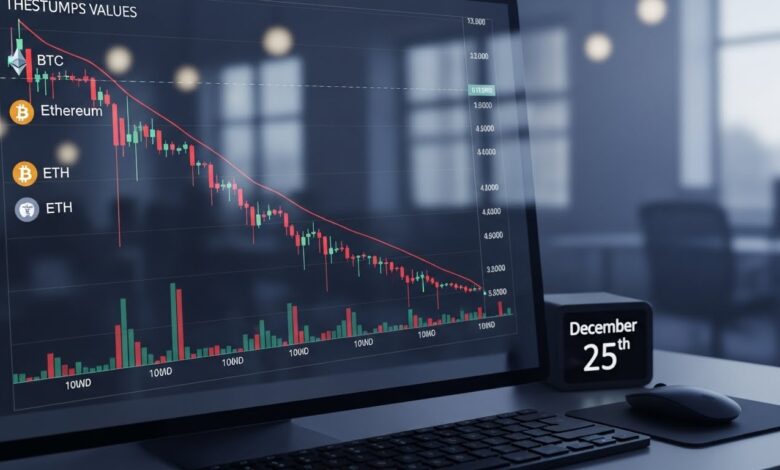
The global cryptocurrency market has entered a subdued phase as the year-end holiday season dampens trading activity across major digital assets. Crypto markets slump as holiday trading stays quiet, reflecting a familiar seasonal pattern where liquidity dries up, volumes fall, and price action becomes increasingly range-bound. While dramatic rallies and sell-offs often dominate crypto headlines, periods like this are equally important, as they reveal how market structure, investor psychology, and macroeconomic expectations interact during times of reduced participation.
Holiday trading typically coincides with institutional desks closing or operating with skeleton staff, retail traders stepping away from screens, and market makers reducing exposure. In this environment, even modest orders can have an outsized impact, yet paradoxically, volatility often compresses as fewer participants are willing to initiate large directional bets. For cryptocurrencies, which trade around the clock, this lull does not mean inactivity but rather a shift toward cautious positioning and consolidation.
This article explores why crypto markets slump during quiet holiday trading, how major assets like Bitcoin and Ethereum are affected, what on-chain and derivatives data reveal about sentiment, and what traders and long-term investors should watch as markets prepare for the post-holiday transition. By examining these dynamics in detail, readers can better understand the forces shaping crypto prices during seasonal slowdowns and position themselves intelligently for what comes next.
The Holiday Effect in Crypto Markets
Seasonal Liquidity Patterns and Market Behavior
Seasonality plays a significant role in financial markets, and cryptocurrencies are no exception. When holiday trading stays quiet, liquidity conditions change noticeably. Fewer active participants mean narrower order books, reduced depth, and less competition between buyers and sellers. As a result, prices often drift lower or sideways, contributing to the perception that crypto markets slump during these periods.
This behavior is partly psychological. Traders are less inclined to open new positions ahead of holidays, preferring to lock in profits or minimize risk. At the same time, institutional investors often pause rebalancing activity until the new year, further reducing capital flows into digital assets. The cumulative effect is a market that feels heavy and directionless, even in the absence of major negative news.
Reduced Volatility Does Not Mean Reduced Risk
While volatility metrics may decline during holiday lulls, risk does not disappear. Thin liquidity can amplify sudden moves if unexpected news breaks or if large holders decide to reposition. Historically, some of the sharpest short-term price spikes or dips have occurred during low-volume periods, catching inattentive traders off guard. Thus, even as crypto markets slump quietly, underlying fragility can persist beneath the surface.
Bitcoin’s Performance Amid Quiet Holiday Trading
Bitcoin Price Action in Low-Volume Conditions
Bitcoin, as the market leader, often sets the tone when crypto markets slump as holiday trading stays quiet. During these periods, Bitcoin price action tends to consolidate within narrow ranges, struggling to sustain breakouts above resistance or breakdowns below support. This reflects the absence of strong conviction from both bulls and bears.
From a technical perspective, moving averages flatten, momentum indicators hover near neutral levels, and volume profiles thin out. Such conditions frustrate short-term traders seeking clear signals but offer valuable insights into where longer-term accumulation or distribution may be occurring. Bitcoin’s ability to hold key psychological levels during holiday slumps often becomes a litmus test for broader market confidence.
Institutional Influence and ETF Flows
In recent years, institutional participation through spot and futures-based Bitcoin products has added another layer to holiday dynamics. With many traditional financial markets partially closed, ETF flows often slow, reinforcing muted price action. When inflows pause or modest outflows appear, they can weigh on sentiment, even if the absolute amounts are small.
However, experienced investors recognize that a temporary slowdown in institutional activity does not necessarily signal a bearish trend. Instead, it often reflects calendar-driven behavior that reverses once normal trading resumes. This understanding helps contextualize why Bitcoin may drift lower during holidays without undermining its longer-term narrative.
Ethereum and Altcoins: Amplified Effects of Quiet Trading

Ethereum’s Sensitivity to Liquidity Conditions
Ethereum tends to mirror Bitcoin during holiday slumps but often with slightly higher sensitivity due to its role as the backbone of decentralized finance and NFTs. When holiday trading stays quiet, on-chain activity such as transaction volumes and gas usage may decline, reinforcing the perception of reduced demand.
This slowdown can pressure Ether’s price, particularly if traders anticipate fewer catalysts in the short term. Yet, Ethereum’s robust developer ecosystem and upcoming protocol developments often anchor longer-term expectations, preventing deeper sell-offs during seasonal lulls.
Altcoins Face Disproportionate Pressure
Altcoins typically feel the impact of quiet holiday trading more acutely. Lower liquidity and smaller market capitalizations make them vulnerable to drift and sporadic volatility. As crypto markets slump, capital often rotates out of speculative tokens into larger, more established assets or stablecoins.
This dynamic can create misleading signals. Weak altcoin performance during holidays may not reflect deteriorating fundamentals but rather temporary risk aversion. Savvy investors monitor relative strength and on-chain metrics to identify projects quietly accumulating interest beneath the surface.
Derivatives Markets and Sentiment Indicators
Futures Open Interest and Funding Rates
Derivatives data provide crucial clues about market sentiment when crypto markets slump as holiday trading stays quiet. Futures open interest often declines as traders close positions ahead of holidays, reducing leverage across the system. Funding rates tend to hover near neutral, signaling balanced positioning and a lack of aggressive directional bets.
These conditions suggest that the market is in a wait-and-see mode. While this may appear uneventful, it can set the stage for sharper moves once participation returns and new narratives emerge.
Options Markets and Volatility Expectations
Options markets further illustrate the holiday effect. Implied volatility frequently drops as demand for hedging decreases and traders expect limited near-term movement. At the same time, longer-dated options may retain higher volatility premiums, reflecting uncertainty about post-holiday developments.
This divergence underscores a key insight: while the present feels calm, expectations for future movement remain intact. Understanding this helps traders align strategies with prevailing conditions rather than forcing trades in unfavorable environments.
Macroeconomic Context and Its Influence
Global Markets Take a Breather
The crypto holiday slump does not occur in isolation. Traditional markets often experience similar slowdowns as investors step back. With fewer economic data releases and central bank communications during holidays, macro-driven catalysts fade temporarily, reinforcing subdued crypto trading.
Yet, macroeconomic themes do not disappear. Inflation trends, interest rate expectations, and geopolitical developments continue to shape longer-term sentiment. Crypto markets slump quietly, but they remain tethered to broader financial narratives that will resurface with force in the new year.
The Role of the US Dollar and Risk Appetite
Currency movements, particularly in the US dollar, also influence crypto during quiet periods. A stable or slightly stronger dollar can weigh on risk assets, including cryptocurrencies, contributing to muted performance. Conversely, any unexpected weakness can spark brief rallies, even amid low liquidity.
These interactions highlight the importance of monitoring macro indicators, even when markets seem dormant. Holiday calm can quickly give way to renewed volatility if conditions shift.
On-Chain Data: What Blockchain Metrics Reveal
Network Activity and User Engagement
On-chain metrics offer a window into underlying health when holiday trading stays quiet. Declines in active addresses, transaction counts, and transfer volumes often accompany seasonal slowdowns. While some interpret this as bearish, context matters.
Holiday periods naturally see reduced user activity across many sectors. For blockchain networks, this does not necessarily indicate waning adoption but rather a temporary pause. Analysts focus on whether metrics rebound promptly after holidays to gauge genuine demand.
Whale Behavior and Accumulation Trends
Large holders, or whales, often take advantage of quiet markets to adjust positions discreetly. On-chain data sometimes reveal steady accumulation during periods when prices drift sideways. This behavior can signal confidence in longer-term prospects, even as retail participation wanes. Observing wallet flows, exchange balances, and long-term holder metrics provides valuable insight into whether the holiday slump is merely cosmetic or indicative of deeper shifts.
Market Psychology During Holiday Slumps
Fear, Apathy, and Patience
Market psychology plays a central role in shaping outcomes when crypto markets slump. With fewer participants, sentiment often swings between mild fear and apathy. Headlines emphasizing low volumes and lackluster performance can reinforce negative perceptions, even if fundamentals remain unchanged.
Experienced investors cultivate patience during these times. Recognizing that seasonal slowdowns are normal helps prevent emotional decision-making. Instead of chasing short-term moves, many focus on research and strategic planning.
The Opportunity Cost of Inaction
While quiet markets may seem unproductive, they offer unique opportunities. Reduced noise allows for clearer analysis of long-term trends, project fundamentals, and macro alignment. For disciplined participants, holiday slumps can be periods of preparation rather than frustration.
What Traders and Investors Should Watch Next
Key Technical Levels and Breakout Zones
As holiday trading winds down, attention shifts to key technical levels. Prolonged consolidation often precedes decisive moves. Identifying support and resistance zones established during the slump can provide valuable reference points for future price action. Traders watch for volume expansion as a confirmation signal once normal activity resumes. Breakouts accompanied by strong participation tend to be more sustainable than those occurring in thin conditions.
Upcoming Catalysts After the Holidays
The post-holiday period frequently brings renewed momentum. Earnings reports from crypto-related firms, regulatory updates, protocol upgrades, and macroeconomic data releases can all reignite volatility. Understanding how crypto markets slump ahead of these events helps contextualize subsequent moves. Preparation involves scenario planning rather than prediction. By considering multiple outcomes, investors can respond effectively when conditions change.
Long-Term Perspective: Slumps as Part of the Cycle
Historical Precedents in Crypto Markets
History shows that holiday slumps are recurring features of crypto cycles. Past years have seen similar patterns of quiet trading followed by sharp moves in January or February. While history does not repeat exactly, it often rhymes, offering valuable lessons. Recognizing this cyclical behavior helps demystify short-term weakness. Crypto markets slump not because of failing fundamentals but because of predictable seasonal dynamics.
Building Resilience Through Understanding
Ultimately, understanding why crypto markets slump as holiday trading stays quiet fosters resilience. Rather than reacting impulsively, informed participants align actions with broader trends and personal risk tolerance. This mindset is crucial in an asset class known for its volatility and rapid shifts.
Conclusion
The current lull in cryptocurrency markets reflects more than just a lack of excitement. It embodies the complex interplay of seasonality, liquidity, psychology, and macro context. As crypto markets slump during quiet holiday trading, prices may drift and sentiment may cool, but the underlying ecosystem continues to evolve.
For traders, this period emphasizes caution, patience, and strategic thinking. For long-term investors, it offers a chance to reassess positions and prepare for renewed activity. When holidays end and participation returns, the groundwork laid during this quiet phase often shapes the next significant move.
FAQs
Q: Why do crypto markets slump during holiday periods?
Crypto markets slump during holidays mainly due to reduced liquidity and participation. Institutional desks slow activity, retail traders step away, and overall volumes decline, leading to muted price action.
Q: Is low volatility during holiday trading a good or bad sign?
Low volatility is neutral rather than inherently good or bad. It reflects reduced activity but can precede stronger moves once normal trading resumes, making it important to stay alert.
Q: Do holiday slumps indicate bearish long-term trends?
Not necessarily. Holiday slumps are often seasonal and temporary. Long-term trends depend more on fundamentals, adoption, and macroeconomic factors than on short-term seasonal effects.
Q: How should traders approach markets when holiday trading stays quiet?
Traders should focus on risk management, avoid overtrading, and use the period for analysis and preparation rather than aggressive speculation.
Q: What usually happens after the holiday trading period ends?
After holidays, trading volumes typically rebound, volatility increases, and markets react to delayed catalysts. This often leads to clearer directional moves in crypto prices.