Why a True Altcoin Season Isn’t Here Yet
Discover why a true altcoin season isn’t here yet, from Bitcoin dominance and liquidity cycles to macro risks and shifting crypto market trends.

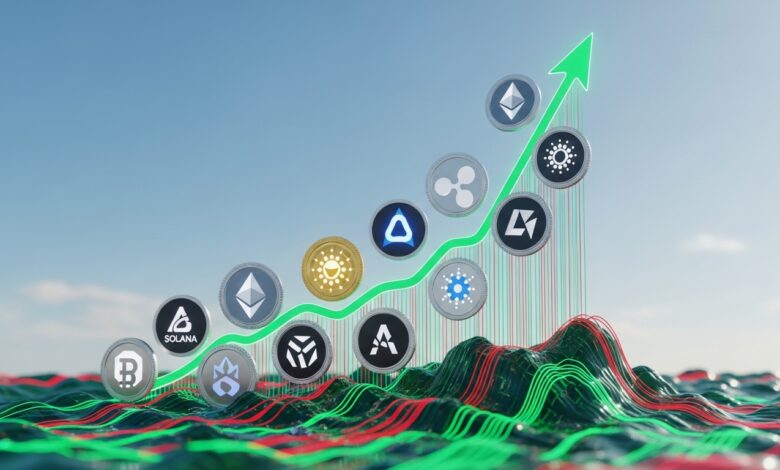
The phrase altcoin season sparks excitement across the cryptocurrency community. It evokes memories of explosive rallies, overnight millionaires, and obscure tokens outperforming Bitcoin by triple-digit percentages. During past cycles, investors watched as capital rotated aggressively from Bitcoin into alternative cryptocurrencies, triggering dramatic price surges across the board. Yet despite repeated predictions on social media and crypto forums, a true altcoin season isn’t here yet.
While certain altcoins have delivered impressive short-term gains, the broader market structure does not reflect the synchronized, high-volume, risk-on environment that defines a genuine altcoin season. Instead, what we see today is a fragmented rally landscape, cautious institutional participation, and persistent Bitcoin dominance. Understanding why a true altcoin season isn’t here yet requires a deeper examination of market cycles, liquidity flows, macroeconomic factors, investor psychology, and on-chain dynamics. This article explores all the critical reasons why the long-awaited altcoin season has not fully materialized—and what needs to change before it does.
Understanding What a True Altcoin Season Actually Means
Before analyzing why a true altcoin season isn’t here yet, it is essential to define what constitutes a real altcoin cycle. A true altcoin season occurs when a majority of alternative cryptocurrencies significantly outperform Bitcoin over a sustained period. This typically involves declining Bitcoin dominance, rapid capital rotation into mid-cap and small-cap tokens, increased retail speculation, and expanding trading volumes across decentralized exchanges and centralized platforms alike.
During previous altcoin seasons—most notably in 2017 and 2021—the market exhibited synchronized bullish momentum. Large-cap altcoins such as Ethereum, Solana, and others rallied alongside speculative micro-cap projects. Social sentiment peaked, funding rates soared, and retail participation exploded. However, today’s environment differs in several structural ways.
Bitcoin Dominance Remains Elevated
One of the clearest indicators that a true altcoin season isn’t here yet is the persistent strength of Bitcoin dominance.
Why Bitcoin Dominance Matters
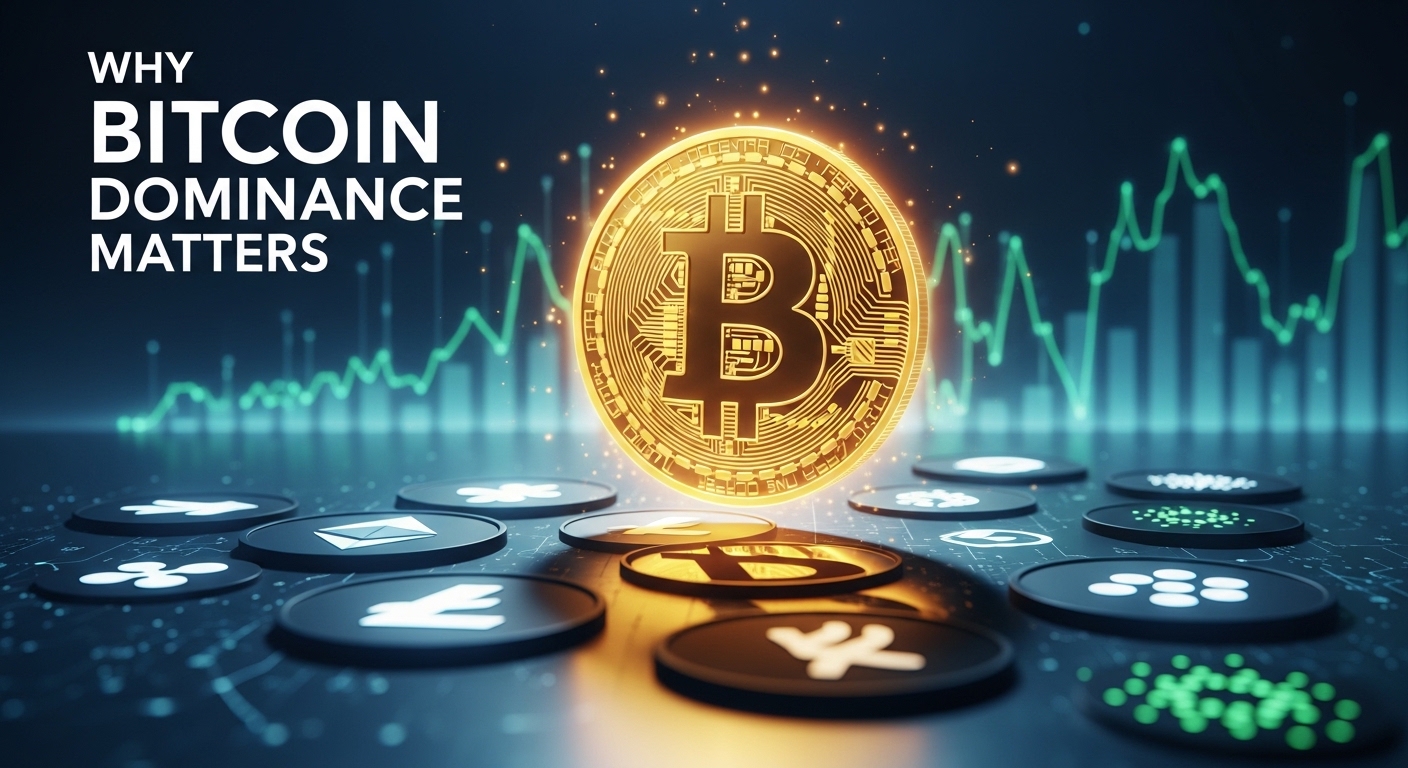
Bitcoin dominance measures Bitcoin’s market capitalization relative to the total cryptocurrency market cap. In genuine altcoin seasons, Bitcoin dominance typically declines sharply as capital flows into alternative assets. Investors take profits from Bitcoin and deploy them into higher-risk tokens seeking greater upside. Currently, Bitcoin dominance remains historically elevated compared to levels seen during peak altcoin cycles. This suggests that capital has not meaningfully rotated into the broader altcoin market.
Institutional Preference for Bitcoin
Institutional investors, including hedge funds and asset managers, have shown stronger preference for Bitcoin exposure rather than diversified altcoin portfolios. Products linked to spot Bitcoin investment vehicles have attracted substantial inflows, reinforcing Bitcoin’s market leadership. Until large pools of capital move beyond Bitcoin and begin allocating heavily into altcoins, a true altcoin season remains unlikely.
Liquidity Conditions Are Not Fully Supportive
Another reason a true altcoin season isn’t here yet lies in global liquidity dynamics.
The Importance of Global Liquidity
Cryptocurrency markets are highly sensitive to liquidity conditions. When central banks adopt accommodative monetary policies and financial conditions loosen, speculative assets such as altcoins tend to benefit disproportionately.
However, the broader macroeconomic backdrop has not returned to the ultra-loose conditions that fueled previous altcoin booms. Elevated interest rates, cautious credit markets, and geopolitical uncertainty have limited the aggressive risk-taking behavior typically associated with altcoin season.
Stablecoin Growth Has Slowed
In past altcoin seasons, rapid expansion in stablecoin supply acted as dry powder for crypto speculation. Increased issuance of stablecoins often preceded sharp rallies across alternative cryptocurrencies. Today, stablecoin growth remains relatively muted compared to prior cycle peaks. Without fresh liquidity entering the ecosystem at scale, sustained altcoin rallies are difficult to maintain.
Retail Participation Is Still Muted
A defining characteristic of altcoin season is widespread retail enthusiasm. Retail traders historically drive speculative runs into lower-cap tokens, meme coins, and emerging narratives.
Search Trends and Social Engagement
Compared to previous cycle highs, retail search interest for many altcoins remains subdued. While specific tokens may trend temporarily, the broad-based frenzy associated with a true altcoin season has not re-emerged. Without mass retail participation, altcoin rallies tend to be narrow and short-lived rather than systemic.
Risk Appetite Has Shifted
Market participants appear more risk-aware than during earlier cycles. Following significant volatility events, bankruptcies, and regulatory crackdowns, traders are more selective in allocating capital to speculative altcoins. This shift in risk appetite dampens the conditions necessary for a full-scale altcoin season.
Capital Rotation Has Been Fragmented
A genuine altcoin season requires synchronized capital rotation. Currently, market flows appear fragmented and narrative-driven.
Sector-Specific Pumps
Instead of broad market expansion, gains have been concentrated in specific sectors such as AI-themed tokens, real-world asset projects, or particular layer-2 ecosystems. While these narratives generate excitement, they do not represent the broad-based outperformance typical of altcoin season.
Lack of Breadth Across Market Caps
In prior altcoin seasons, small-cap and micro-cap tokens often outperformed large caps dramatically. At present, many lower-cap assets remain significantly below previous highs, and trading volumes are uneven. This lack of breadth signals that a true altcoin season isn’t here yet.
Ethereum Has Not Fully Taken Leadership

Historically, Ethereum plays a pivotal role in triggering altcoin season. When Ethereum significantly outperforms Bitcoin, it often signals the beginning of broader altcoin momentum.
Ethereum vs Bitcoin Ratio
The ETH/BTC ratio is widely watched as a proxy for altcoin strength. Sustained appreciation in this ratio typically precedes strong altcoin cycles. Currently, Ethereum has not consistently outperformed Bitcoin to the degree seen during previous altcoin seasons. Without decisive Ethereum leadership, the broader altcoin market struggles to gain traction.
Ecosystem Activity Remains Uneven
Although decentralized finance and layer-2 adoption continue to develop, activity levels have not matched prior speculative peaks. For a true altcoin season to emerge, ecosystem engagement must accelerate meaningfully.
Regulatory Uncertainty Continues to Weigh on Altcoins
Regulatory clarity plays a major role in investor confidence. Many altcoins face ongoing scrutiny regarding classification, compliance, and exchange listings.
Impact on Investor Behavior
Uncertainty around token classification discourages institutional participation in alternative cryptocurrencies. While Bitcoin has increasingly been treated as a commodity in many jurisdictions, numerous altcoins operate within ambiguous regulatory frameworks. Until regulatory clarity improves, capital inflows into altcoins may remain constrained.
Market Structure Has Evolved
The crypto market of today differs from the retail-dominated environment of previous altcoin seasons.
Greater Institutional Influence
Institutional capital tends to favor more established assets with stronger liquidity and lower volatility. This structural shift reduces the probability of widespread speculative altcoin surges.
Derivatives Market Expansion
The growth of crypto derivatives markets has also changed price dynamics. Hedging tools and leveraged trading mechanisms can dampen or redirect volatility patterns that once fueled altcoin season rallies.
Profit-Taking Cycles Are Incomplete
Altcoin season often follows significant Bitcoin rallies. After Bitcoin reaches a local or macro top, investors rotate profits into alternative assets.
Bitcoin Has Not Exhausted Its Cycle
In the current market structure, Bitcoin has not clearly entered a distribution phase typically associated with capital rotation. As long as Bitcoin continues to command attention and liquidity, altcoins struggle to dominate. A true altcoin season usually begins when Bitcoin consolidates after a major rally, freeing capital for speculative deployment elsewhere.
On-Chain Metrics Show Caution
On-chain indicators provide additional evidence that a true altcoin season isn’t here yet.
Network Growth Is Moderate
While certain altcoins show growing addresses and transaction volumes, the explosive network expansion characteristic of previous altcoin cycles has not returned across the board.
Long-Term Holder Behavior
Many long-term holders appear cautious rather than euphoric. In past altcoin seasons, rapid token velocity and widespread profit-taking signaled peak speculation. Today’s metrics suggest more measured behavior.
Sentiment Is Optimistic but Not Euphoric
Sentiment indicators reveal optimism in the crypto market, but not the exuberance typical of altcoin season.
Fear and Greed Dynamics
True altcoin season often coincides with extreme greed readings, parabolic price charts, and aggressive social media hype. Current sentiment levels remain comparatively restrained. Without widespread euphoria, the sustained buying pressure needed for altcoin season may not materialize.
What Needs to Change for a True Altcoin Season?
If a true altcoin season isn’t here yet, what conditions would signal its arrival? First, Bitcoin dominance would need to decline decisively. Second, Ethereum would likely need to outperform Bitcoin consistently. Third, global liquidity conditions would have to improve significantly. Fourth, retail participation would need to return at scale. Finally, regulatory clarity would need to reduce uncertainty surrounding alternative cryptocurrencies. When these elements align, the probability of a genuine altcoin season increases substantially.
Conclusion
Despite periodic rallies in individual tokens, the structural indicators required for a true altcoin season are not fully present. Elevated Bitcoin dominance, cautious liquidity conditions, muted retail participation, fragmented capital rotation, regulatory uncertainty, and incomplete profit-taking cycles all point to the same conclusion: a true altcoin season isn’t here yet.
Markets move in cycles, and crypto remains one of the most dynamic asset classes in modern finance. While anticipation builds, disciplined investors must recognize the difference between isolated altcoin pumps and a synchronized altcoin season. Until macro liquidity improves, Ethereum gains decisive leadership, and broad-based speculation returns, expectations of a full-fledged altcoin season may remain premature. The next altcoin season will likely arrive—but it will be unmistakable when it does.
FAQs
Q: What defines a true altcoin season?
A true altcoin season occurs when most alternative cryptocurrencies significantly outperform Bitcoin over a sustained period, typically accompanied by declining Bitcoin dominance and strong retail participation.
Q: Why is Bitcoin dominance important for altcoin season?
Bitcoin dominance reflects capital concentration in Bitcoin. A declining dominance ratio usually signals capital rotation into altcoins, a key ingredient for altcoin season.
Q: Does Ethereum performance affect altcoin season?
Yes. Historically, Ethereum outperformance against Bitcoin often precedes broader altcoin rallies, making it a leading indicator of altcoin season.
Q: Can altcoin season happen during high interest rates?
It is less common. Tight liquidity conditions and high interest rates generally suppress speculative risk-taking, which is essential for a true altcoin season.
Q: How can investors prepare for a potential altcoin season?
Investors can monitor Bitcoin dominance, ETH/BTC trends, liquidity conditions, stablecoin supply growth, and retail sentiment indicators to identify early signals of altcoin season.
Also More: New Altcoin Under $0.05 Gains Buzz After V1 Launch